TIAA Leads the Way to 401(k) Target Date Corruption

TIAA is on the cutting edge of corruption in the retirement space, pioneering the use of hidden contract-based investments inside Target Date Funds (TDFs). In Rhode Island, as featured in the NBC story, these TDFs are designated as the default option, or Qualified Default Investment Alternative (QDIA). The problem is that while marketed as “low-cost,” these products rely on undisclosed spread profits embedded in insurance contracts.  These secret profits rely on secret credit and liquidity risks that were exposed when some local Sheriffs wanted some liquidity in their retirement.

In Rhode Island, TIAA falsely claimed its annuity-based TDFs had lower fees than an all–index fund solution offered by Vanguard. State documents even listed the cost of the TIAA annuity sleeve as “0.00%.” In reality, spread-based profits—estimated at 120 to 150 basis points annually—drain millions of dollars each year from participants’ savings.

By comparison, Vanguard’s Target Retirement Funds charge around 0.06%. The economic reality is stark: Rhode Island participants are effectively paying TIAA about $4 million annually in hidden spread revenues, versus just $200,000 if their money had remained in Vanguard’s all-index solution.


False Comparisons Against Vanguard

TIAA’s strategy hinges on comparing apples to oranges. By disguising spread profits as “no fees,” they make their annuity-based products appear cheaper than Vanguard’s transparent index funds. This deception works because Vanguard’s fee disclosures comply with SEC mutual fund standards—while TIAA relies on weak state insurance rules and Collective Investment Trust (CIT) structures to obscure costs and risks.


Exploiting CIT Loopholes

TIAA’s use of CITs enables it to sneak in annuity contracts under the radar. Unlike SEC-regulated mutual funds, CITs are governed only by state trust and banking regulators, with far weaker standards of disclosure, accounting, and fiduciary oversight. This loophole is already being exploited not just for annuities, but as a potential template to insert opaque private equity, hedge funds, and even crypto into retirement plans.

CITs allow blended accounting inside target date funds.  A single target date fund could hold mutual funds (market value accounting), annuities (book value accounting), private equity (manager valuations), and even crypto—all in one NAV. The net asset value the participant sees will be a cocktail of different accounting standards, some transparent, some opaque.

Fraudulent return smoothing from annuities and private equity is achieved by artificially low reported volatility and correlations, which overallocate them in Asset Allocation models that drive target date fund risk allocations. You could be looking at a “smooth” performance line without realizing risk is hidden under the hood.


Gateway to Broader Corruption

This tactic is the proverbial “gateway drug” of retirement plan corruption. Once annuities can be slipped into Target Date Funds under the guise of “no fee” products, the door is wide open for even more dangerous alternatives. Trump’s 2025 Executive Order on retirement plans explicitly promoted private equity, crypto, and annuities in 401(k) plans.

By hiding annuity contracts in state-regulated CITs, TIAA is creating the blueprint for a much broader erosion of fiduciary protections in America’s retirement system.


Conclusion

TIAA’s behavior demonstrates how retirement plan corruption evolves: it starts with hidden spread fees in annuity contracts, embeds them in default TDFs, and expands the model to private equity and cryptocurrency. Regulators and fiduciaries who ignore these practices are enabling a dangerous shift away from transparency and participant protection.

The SEC and Department of Labor must step in to reassert federal standards. Otherwise, public retirement savers will continue to pay billions in undisclosed costs while believing they are invested in “low-fee” products.


Footnotes

  1. Rhode Island Sheriff’s retirement account woes bring scrutiny to state-run plan, NBC News (Sept. 2025). Link.
  2. Christopher Tobe, Trump’s Crypto and Private Equity in 401k Push Enabled by the Gateway Drug Annuities, Commonsense 401k Project (Aug. 7, 2025). Link.
  3. Christopher Tobe, Keep Private Equity Out of 401k Target Date Funds, Commonsense 401k Project (Sept. 4, 2025). Link.
  4. Christopher Tobe, Trump’s Executive Order is Not a Get Out of Jail Free Card for 401k Plan Sponsors (Fixed Annuity Example), Commonsense 401k Project (Aug. 28, 2025). Link.
  5. Christopher Tobe, 4 Sets of Books: How Trump’s 401k Push Opens the Door to Accounting Chaos, Commonsense 401k Project (Aug. 12, 2025). Link.

TIAA Exposed for Excessive Hidden Annuity Spread Fees — Again

Pulitzer Prize–winning journalist Gretchen Morgenson has once again exposed the hidden risks and fees buried in TIAA’s annuity products. In her August 2024 NBC News investigation, I was quoted estimating that TIAA extracts excessive hidden spread profits of over 120 basis points (1.2%) annually on its flagship annuity, TIAA Traditional

Just one year later, in September 2025, I repeated my claim that TIAA’s hidden annuity spreads range from 120 to 150 basis points — and still, not a single insurer has challenged the accuracy of these numbers

Instead, TIAA’s spokesman declined to disclose what the company earns on these products, dismissing the question as “competitive and proprietary information.” That answer may suffice in public-sector retirement plans exempt from ERISA, but in ERISA-covered plans, the Supreme Court’s ruling in Cunningham v. Cornell makes clear that TIAA is a party in interest, and fiduciaries therefore have a duty to know and evaluate these spreads. Hiding them is a fiduciary red flag.


Liquidity Lockups and Credit Risk

The Rhode Island sheriffs who protested TIAA’s retirement products in 2025 were not just upset about undisclosed costs. What pushed them to the brink was discovering that their money was locked up, subject to liquidity restrictions that prevented access to their savings

As Dr. Tom Lambert and I explain in our forthcoming article in the Journal of Economic Issues, these restrictions are not incidental: they exist because nearly 50% of TIAA’s balance sheet consists of illiquid private credit and mortgages. Furthermore, if TIAA were downgraded, the liquidity would get worse.

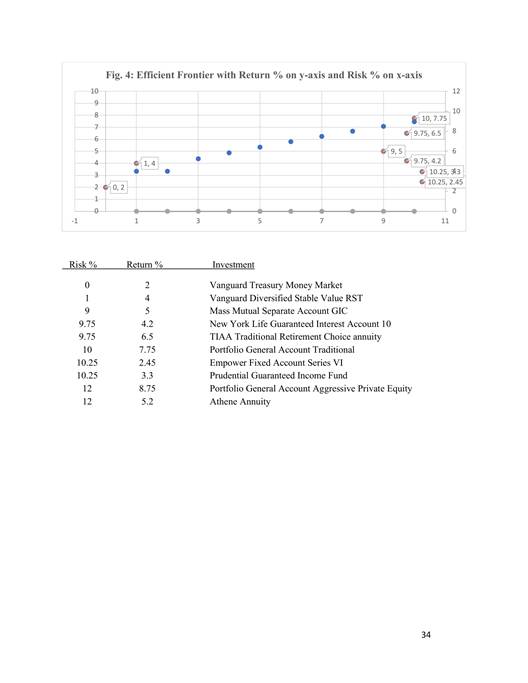
Participants are forced to bear liquidity and single-entity credit risk. The risk of a General Account IPG product, such as the TIAA annuity, has been documented by Fabozzi to be 10 times that of a synthetic diversified stable value fund, like Vanguard RST or Fidelity MIPS. The return premium from these risks is quietly diverted into TIAA’s spread profits.


False Comparisons Against Vanguard

TIAA has also claimed, falsely, that its annuity-based Target Date Funds are cheaper than low-cost Vanguard index funds. In Rhode Island, state documents listed the cost of TIAA’s annuity sleeve as “0.00%”, while actual spread profits drained millions from participants each year

By comparison, Vanguard’s Target Retirement Funds charge around 0.06%. The economic reality: participants in the Rhode Island plan are paying TIAA about $4 million annually in hidden spread revenues, versus just $200,000 if their money had remained in Vanguard’s all-index solution


Regulatory Arbitrage: Weak State Oversight

Unlike SEC-registered mutual funds, annuity contracts operate under state insurance regulation. This allows TIAA to present products with:

  • No fee disclosure (spread profits hidden),
  • No diversification (single-issuer credit risk), and
  • Liquidity restrictions that participants do not control

Meanwhile, TIAA funnels these opaque contracts into state-regulated Collective Investment Trusts (CITs) — weak vehicles that lack the transparency and accountability standards of mutual funds. This stealth tactic could set the precedent for hiding not just annuities, but also private equity and even crypto allocations in retirement defaults.


The Broader Pattern of Misrepresentation

This is not an isolated scandal. Regulators in Montana, Vermont, and Washington have been probing TIAA for steering participants into high-cost proprietary products

In 2021, the SEC and New York Attorney General fined TIAA $97 million for propelling clients into higher-cost accounts without disclosure

In 2024, the SEC fined TIAA another $2.2 million for conflicts of interest in IRA recommendations

These actions expose a consistent pattern: TIAA maximizes profits by obscuring true costs while claiming to offer “low-fee” retirement solutions.


Conclusion: Fiduciary Breach in Plain Sight

TIAA’s hidden annuity spreads represent not just an accounting quirk, but a structural breach of fiduciary principles:

  • Excessive hidden fees (120–150 bps vs. 5 bps index funds),
  • Liquidity lockups that enrich TIAA at participants’ expense,
  • Single-entity credit risk that violates the duty to diversify.

As I said in my NBC interview, annuities “flunk the most basic investment principle of diversification — do not put all your eggs in one basket.”

The bottom line: annuities should be prohibited as default investments in ERISA retirement plans. Until regulators impose SEC-style transparency and fiduciaries demand disclosure of spread profits, TIAA will continue to extract billions in hidden fees from unsuspecting teachers, nurses, and public servants.


References

  1. Gretchen Morgenson, “TIAA pushes costly retirement products to cover losses,” NBC News (Aug. 2024). Link.
  2. Gretchen Morgenson, “Rhode Island sheriffs’ retirement account woes bring scrutiny to state-run plan,” NBC News (Sept. 2025). Link.
  3. Chris Tobe & Tom Lambert, “Safe Annuity Retirement Products and a Possible U.S. Retirement Crisis,” Journal of Economic Issues (forthcoming 2025). SSRN link.
  4. Federal Reserve Board, “What’s Wrong with Annuity Markets?” FEDS Working Paper No. 2021-44 (Aug. 2021).
  5. Cunningham v. Cornell Univ., 86 F.4th 961 (2d Cir. 2023).
  6. Handbook of Stable Value Investments, edited by Frank J. Fabozzi, CFA 1998. Chapter 14 

TIAA investigations, settlements, and lawsuits

Weak Standards Make Annuities Prohibited Transactions in ERISA Plans

Introduction

ERISA was enacted to impose strict fiduciary, accounting, and investment performance standards on retirement plan assets. SEC-registered mutual funds must meet these standards through transparent reporting, daily pricing, and oversight by independent boards. By contrast, insurance-based annuities operate under weaker fiduciary standards, opaque accounting rules, and undisclosed performance spreads, making them unlikely to qualify for an exemption from ERISA’s prohibited transaction rules.¹

As my earlier analyses demonstrate, annuities have become a gateway drug that opened the door to non-standard accounting and conflicted arrangements in retirement plans.²

I. Fiduciary Standards: ERISA §404(a) vs. NAIC Rule 275

ERISA §404(a) imposes explicit duties of prudence and loyalty, requiring fiduciaries to act solely in the interest of participants and beneficiaries. By contrast, NAIC Rule 275, the state insurance ‘best interest’ standard, does not include a loyalty duty and permits conflicts of interest if disclosures are made.³ Plan fiduciaries cannot rely on NAIC compliance to meet ERISA duties. A product that satisfies Rule 275 may still violate ERISA’s exclusive benefit rule, making it a prohibited transaction.

II. Accounting Standards: Book Value vs. Market Value

Mutual funds must report daily mark-to-market NAVs under SEC rules, fully reflecting gains and losses. Annuities, especially General Account or Separate Account contracts, are governed by statutory accounting. Assets are often held at amortized cost, meaning losses are hidden unless realized. Portfolios frequently contain 30–50% private credit and alternatives.⁴ Book-value accounting disguises true risk, making annuities appear ‘safe’ when underlying portfolios may be volatile or impaired.

III. Investment Performance Standards: Spreads and Opaqueness

Mutual funds disclose expense ratios, portfolio holdings, and benchmark comparisons. Annuities credit 2–3% to participants while earning 6–7% on general account assets. The undisclosed spread—sometimes over 400 basis points—represents pure insurer profit.⁵ This opacity prevents fiduciaries from assessing the reasonableness of compensation, triggering ERISA §406(b) self-dealing prohibitions.

IV. Conflicted Providers and “Party in Interest” Risks

In many 401(k) plans, the recordkeeper is also the annuity provider. As Cunningham v. Cornell highlighted, this dual role creates inherent conflicts of interest. When insurers steer plan assets into affiliated annuities, fiduciaries face direct exposure under the prohibited transaction rules.⁶

V. Transparency Suppression: Prudential and NAIC RBC Proposal

Prudential, domiciled in New Jersey, shields its quarterly solvency filings under N.J. Stat. §17-23-1, denying plan fiduciaries access to critical risk data.⁷ The NAIC Capital Adequacy Task Force has proposed banning public disclosure of insurer Risk-Based Capital (RBC) scores, even though the Society of Actuaries warns that transparency is essential.⁸ Fiduciaries cannot evaluate insurer solvency without this data, a critical factor in selecting annuities.

VI. Litigation Outlook

The Supreme Court has already narrowed available exemptions from prohibited transaction rules.² Combined with weak fiduciary standards, opaque accounting, undisclosed spreads, and active suppression of solvency data, annuities present a litigation time bomb: plaintiffs will argue that fiduciaries cannot prudently select annuities without access to solvency and fee data. Courts will increasingly view annuities as per se prohibited transactions absent full transparency. Most annuities do not have downgrade provisions, so their liquidity risks go up simultaneously with their credit risk. Fabozzi, in the 1998 Handbook of stable value, says that General Account fixed annuities have 10 times the risk of synthetic diversified stable value.

Conclusion

Annuities fail across three pillars: fiduciary duties, accounting standards, and performance transparency. SEC-registered mutual funds meet all three; annuities meet none. By continuing to rely on these weaker standards, insurers are ensuring that their products will be viewed as prohibited transactions under ERISA, and plan fiduciaries who adopt them will face heightened litigation risk.

Footnotes

¹ ERISA §406; see also https://commonsense401kproject.com/2025/06/13/annuities-are-prohibited-transactions-via-chat-gpt/
² https://commonsense401kproject.com/2025/05/10/annuities-flunk-prohibited-transactions-exemption-scotus-ruling-will-open-floodgates-of-litigation/
³ Comparison of ERISA §404(a) with NAIC Rule 275; see also https://commonsense401kproject.com/2025/07/27/diversification-abandoned-why-plan-fiduciaries-must-rethink-fixed-annuities-and-pension-risk-transfers/
https://commonsense401kproject.com/2025/08/12/4-sets-of-books-how-trumps-401k-push-opens-the-door-to-accounting-chaos/
⁵ Spread profits analysis; see https://commonsense401kproject.com/2025/06/24/state-guarantee-associations-behind-annuities-are-a-joke/
⁶ Cunningham v. Cornell Univ., 86 F.4th 961 (2d Cir. 2023).
⁷ N.J. Stat. §17-23-1.
⁸ NAIC, Capital Adequacy Task Force, Special National Meeting Packet (2025), p.56.

SOURCES

The Handbook of Stable Value Investments 1st Edition by Frank J. Fabozzi 1998 Jacquelin Griffin Evaluating Wrap Provider Credit Risk in Synthetic GICs pg. 272 https://www.amazon.com/Handbook-Stable-Value-Investments/dp/1883249422

National Association of Government Defined Contribution Administrators.  2010.  2010 Issue Brochure – What Plan Sponsors Should Know About Stable Value Funds (SVF) www.nagdca.org/documents/StableValueFunds.pdf

Shames, Mitch.  2022.  “Annuities: The straw that breaks the back of retirement plan fiduciaries,” Benefits Pro.  May 3, 2022.  https://www.benefitspro.com/2022/05/03/annuities-the-straw-that-breaks-the-back-of-retirement-plan-fiduciaries/?slreturn=20240312164319 .  Accessed on March 12, 2024.

Tobe, Christopher B.  2004. “The Consultants Guide to Stable Value.”  Journal of Investment Consulting, 7(1), Summer 2004, Available at SSRN: https://ssrn.com/abstract=577603 .  Accessed on March 12, 2024. 

Federal Reserve Bank of Minneapolis Summer 1992 Todd, Wallace SPDA’s and GIC’s http://www.minneapolisfed.org/research/QR/QR1631.pdf

“Safe” Annuity Retirement Products and a Possible US Retirement Crisis Journal of Economic Issues Accepted 2024  Dr. Tom Lambert and Chris Tobe  https://papers.ssrn.com/sol3/papers.cfm?abstract_id=4761980

Testimony by Ben S Bernanke, Federal Reserve, US House of Representatives, Washington DC, 24 March 2009 https://www.bis.org/review/r090325a.pdf

Keep Private Equity out of 401(k) Target Date Funds

Over half of all 401(k) assets are invested in Target Date Funds (TDFs), the default investment for most workers. Proposals to embed 15% allocations to private equity (PE) in these TDFs raise severe fiduciary, legal, and policy concerns.

Private equity’s opaque self-valuations, smoothed returns, and layered fees (≈600 bps) make it wholly unsuitable for retirement savers—particularly in default funds where workers have no choice. This is not innovation; it is regulatory arbitrage designed to funnel billions in hidden fees out of participant accounts.


Key Findings

1. Fees 100x higher than index funds.

  • PE all-in costs: ~6.0% annually (Phalippou 2020).
  • Index funds: 0.03%–0.05%.
  • A 15% sleeve adds 0.90% annual drag to the entire TDF—cutting lifetime wealth by 20–25%.

2. Fraudulent return smoothing.

  • PE funds self-price and delay write-downs.
  • Reported volatility and correlations are artificially low.
  • Asset allocation models therefore over-allocate to PE, embedding mispriced risk in retirement glidepaths.

3. Liquidity mismatch.

  • TDFs promise daily liquidity.
  • PE funds lock up capital for 10+ years.
  • Participants could face redemption delays, gates, or markdowns inconsistent with plan representations.

4. Weakest regulator wins.

  • SEC and OCC rules demand transparency and independent valuation.
  • Sponsors are instead turning to state-chartered CITs, where oversight is minimal and disclosure optional.
  • This is textbook regulatory arbitrage.

5. Fiduciary red flags.

  • ERISA requires prudence and reasonable fees.
  • Supreme Court precedent (Tibble; Hughes) obligates ongoing monitoring and removal of high-cost options.
  • Embedding PE in QDIAs (defaults) is especially egregious because workers never affirmatively opt in.

Policy Recommendations

  1. DOL & SEC Joint Guidance: Prohibit private equity allocations in QDIAs until independent valuation and full fee disclosure are mandatory.
  2. State CIT Oversight: Close the loophole by requiring federal standards (SEC/OCC level) for any retirement-plan CIT.
  3. Fee Disclosure Reform: Mandate reporting of all fees, including portfolio company monitoring and transaction charges.
  4. Participant Protections: Require opt-in consent, with plain-English disclosures, before allocating participant funds to PE.

Conclusion

Private equity in 401(k) Target Date Funds is not diversification—it is defaulting American workers into opaque, fee-rich products they cannot understand or escape. This violates fiduciary duty under ERISA and undermines retirement security. Regulators and policymakers should act now to prevent a massive transfer of wealth from retirement savers to private equity sponsors.

Trump’s Executive Order Is Not a “Get Out of Jail Free Card” for 401(k) Plan Sponsors – Fixed Annuity Example

President Trump’s recent Executive Order promoting the inclusion of private equity, crypto, and annuities in 401(k) plans has been widely interpreted in the retirement industry as a green light for sponsors to load plans with opaque, high-risk, or high-fee products. But as fiduciary attorney Jim Watkins makes clear in his August 11 article, the Executive Order does not erase the fundamental duties under ERISA. Plan sponsors still bear the highest obligation of loyalty and prudence. Courts have consistently ruled that failure to independently investigate and evaluate investments constitutes a breach of fiduciary duty.

The Legal Precedent: Independent Investigation Required

Federal courts have long reinforced this principle, and it is nearly impossible to do an independent investigation of Private Equity, Crypto, or Annuities.  Tip to Jim Watkins on cites

  • Liss v. Smith, 991 F. Supp. 278, 297 (S.D.N.Y. 1989), citing In re Unisys Savings Plan Litigation, 74 F.3d 420, 435 (3d Cir. 1996), and Whitfield v. Cohen, 682 F. Supp. 188, 195 (S.D.N.Y. 1988), emphasized that “the failure to make any independent investigation and evaluation of a potential plan investment” is itself a fiduciary breach.
  • In In re Citigroup ERISA Litigation, 112 F. Supp. 3d 156 (S.D.N.Y. 2015), aff’d 2017, the court underscored that fiduciaries must independently and thoroughly evaluate each investment option offered in a 401(k) plan.

The message is clear: no Executive Order can override statutory fiduciary standards established by ERISA and reinforced by decades of case law.

Application to Fixed Annuities in Today’s 401(k) Plans

The most immediate application of these rulings is to fixed annuities offered in 401(k) plans—especially those marketed by insurers and recordkeepers:

  • Conflicted Providers: Fixed annuities are often offered by the plan’s recordkeeper, a “party in interest” under ERISA (Cunningham v. Cornell). This creates an inherent conflict when the recordkeeper profits from spreads or commissions embedded in the product.
  • Undisclosed Spreads: Unlike mutual funds, fixed annuities lack transparent expense ratios. Insurers earn investment returns on their general account portfolios—often 6–7%—but credit participants only 2–3%. The undisclosed spread, sometimes exceeding 400 basis points, is pure profit to the insurer and impossible for a plan sponsor to evaluate without disclosure.
  • Hidden Commissions: Many consultants and brokers recommending fixed annuities receive undisclosed insurance commissions, further tainting the fiduciary process.
  • Opaque Contracts: Few plan sponsors, and even fewer consultants, actually read or understand the dense insurance contracts that govern these products.
  •  

Transparency Failures = Fiduciary Breaches

Because fixed annuity spreads are concealed, plan fiduciaries cannot meet their duty of prudence to “independently investigate and evaluate” the investment option. As the courts in Liss, Unisys, Whitfield, and Citigroup ruled, the absence of such an investigation is itself a breach—regardless of whether the investment later performs well or poorly.

Trump’s Executive Order does not insulate plan sponsors from liability when they rubber-stamp insurer products without rigorous due diligence. Fiduciaries who rely on conflicted recordkeepers or consultants, accept opaque annuity contracts at face value, or fail to benchmark spreads against transparent stable value alternatives are exposing themselves—and their participants—to enormous risks.

Conclusion

The lesson for plan sponsors is straightforward: ERISA’s fiduciary duty of prudence cannot be waived by presidential decree. Courts have already provided the roadmap: every investment option, especially opaque fixed annuities, must be independently investigated and evaluated. Failure to do so is a fiduciary breach.

In today’s environment, the real danger is that plan sponsors misinterpret political signals as permission to ignore their duties. The law says otherwise.

Misleading Claims of GIPS Compliance at Ohio STRS

What STRS Tells Members

Ohio State Teachers Retirement System (STRS) regularly states that its investment program is audited for compliance with the CFA Institute’s Global Investment Performance Standards (GIPS®). In fact, STRS highlights the “ACA Performance Services Letters” as if they are an independent certification that the entire portfolio — including private equity — meets these rigorous standards.

The Problem: GIPS Does Not Cover Everything

  • Traditional assets like public equities and bonds can be benchmarked and reported under GIPS, which require daily pricing, market valuation, and time-weighted returns.
  • Private equity and other alternatives are fundamentally different:
    • Returns are often based on manager self-valuations, not market pricing.
    • Cash flows are irregular and subject to GP discretion.
    • Leverage, subscription lines of credit, and co-investments distort reported returns.
  • GIPS itself has special guidance for alternative assets, but these provisions cannot cure the fact that STRS only gets opaque, manager-provided marks, not independent valuations.

Why the ACA Letters Mislead

  • The ACA Performance Services assurance letters STRS shows to members don’t certify the quality of the numbers — they only certify that certain composites were presented “in accordance” with GIPS procedures.
  • This is an attestation engagement, not a financial audit. It does not:
    • Verify the accuracy of private equity valuations;
    • Guarantee that fees and expenses are correctly applied;
    • Confirm that all assets are included.
  • Importantly, ACA letters are limited-scope. They may only cover selected composites or asset classes — not the entire STRS portfolio.

Why This Matters for Fiduciary Duty

  • Teachers are being told that STRS’s entire investment program is GIPS-compliant, when in reality the most opaque, highest-fee asset class — private equity — falls outside the effective scope.
  • The assurance letters create a false sense of security, leading members to believe that their money is being measured with the same transparency as public mutual funds.
  • Fiduciaries who repeat these claims risk breaching their duty of loyalty and prudence by substituting “compliance marketing” for real transparency.

Bottom Line

STRS’s claim of “full GIPS compliance” is misleading at best, deceptive at worst.

  • Yes, portions of the portfolio may follow GIPS procedures.
  • But the private equity portfolio — where billions are at stake and transparency is weakest — is not independently validated under GIPS.
  • Until STRS subjects its private equity program to true independent valuation and public disclosure of contracts, no compliance letter can change the fact that teachers are being misled about their returns.

Possible CFA Ethics Violations by STRS Ohio Charterholders

According to LinkedIN there are at least 10 CFA charterholders working at STRS Ohio.  CFA Charterholders sign an annual statement affirming they will comply with the CFA Institute Code of Ethics and Standards of Professional Conduct. At a minimum, three key principles apply here:

  • Standard I(C): Misrepresentation — Members must not make or allow false or misleading claims.
  • Standard I(D): Misconduct — Members must not engage in conduct that compromises professional reputation or integrity.
  • Standard V(A): Diligence and Reasonable Basis — Members must exercise diligence, independence, and thoroughness in making recommendations and ensuring performance reporting is accurate.
  • Standard VII(A): Conduct as Members and Candidates — Members must not engage in conduct that compromises the integrity of CFA Institute or the CFA designation.

1. Misleading GIPS Compliance Claims

  • Issue: STRS claims full GIPS compliance, and public-facing ACA “assurance” letters are used to reinforce this. In reality, compliance does not extend to private equity — the largest and most opaque asset class.
  • Possible Violation:
    • Standard I(C): Misrepresentation — By signing off on these claims (or staying silent while they’re used in STRS materials), CFA charterholders could be complicit in misrepresenting performance standards to members.
    • Standard V(A): Diligence and Reasonable Basis — If CFAs knew or should have known private equity returns were not validated under GIPS, endorsing compliance is not diligent or reasonable.

2. The Anonymous Letter → QED Case Against Trustees

  • Issue: Attorney General Yost’s case against reform trustees Steen and Fichtenbaum was built on an anonymous staff letter, very likely authored or supported by STRS investment staff (including CFA charterholders).
  • Possible Violation:
    • Standard I(D): Misconduct — Participating in or enabling an anonymous smear campaign violates the professional duty of honesty and integrity.
    • Standard IV(A): Loyalty — A CFA charterholder’s duty is to their client — in this case, Ohio teachers — not to protecting STRS management from scrutiny.
    • Standard VII(A): Conduct as Members — Hiding behind anonymous letters to trigger “lawfare” undermines the integrity of the CFA designation.

3. Endorsing ACA as “Governance Consultant”

  • Issue: Instead of hiring an independent governance consultant, STRS hired ACA, a firm with a track record of legitimizing excessive pay (see CalPERS case via Naked Capitalism). ACA also backs STRS’s questionable GIPS claims.
  • Possible Violation:
    • Standard VI(A): Disclosure of Conflicts — CFA charterholders involved in recommending ACA had a duty to disclose potential conflicts — namely, ACA’s incentive to validate STRS’s compensation structure.
    • Standard I(C): Misrepresentation — By presenting ACA as “independent,” when ACA’s business model favors staff, charterholders may have misled the board and members.
    • Standard III(A): Loyalty, Prudence, and Care — Endorsing conflicted advisors who rationalize excessive fees and bonuses undermines fiduciary duty to beneficiaries.

Broader Concern: Culture of Silence vs. “Name and Shame”

The CFA Code emphasizes integrity of markets and protecting clients first. Charterholders are expected to “name and shame” — meaning they should call out unethical practices even when doing so is uncomfortable.

At STRS, instead of whistleblowing, CFA charterholders:

  • Accepted inflated bonuses linked to opaque valuations,
  • Backed staff-driven narratives over independent governance, and
  • Stayed silent while trustees were attacked with the QED distraction.

That silence itself could be construed as a violation of Standard I(D) Misconduct and Standard VII(A) Conduct as Members.


Conclusion

There is a colorable case that multiple CFA Standards may have been violated by STRS charterholders:

  1. Misrepresentation (I(C)) — GIPS compliance claims that omit private equity.
  2. Misconduct (I(D)) — Anonymous letters weaponized against trustees.
  3. Conflicts of Interest (VI(A)) — Supporting ACA despite conflicts.
  4. Loyalty, Prudence, and Care (III(A)) — Failing to protect teachers from excessive fees and secrecy.

At minimum, these raise grounds for referral to the CFA Institute’s Professional Conduct Program.

Ohio Media’s Complicity: How a Fake Scandal Hid the Real Teacher Retirement System Corruption

I. Introduction

Ohio educators and retirees have been betrayed not only by their pension system but also by much of their state’s press corps. While the State Teachers Retirement System (STRS) funnels hundreds of millions annually into secret no-bid private equity contracts, the Ohio media—with rare exceptions—has amplified a manufactured scandal around “QED,” a firm with no assets, no SEC registration, and no role in managing STRS money.

Instead of asking why billions in opaque contracts remain hidden, much of Ohio’s press corps acted as enablers for Attorney General Dave Yost and Governor Mike DeWine, echoing their narrative and distracting from the real corruption.


II. The QED Distraction

QED was a concept firm, never SEC-registered, with $0 in assets and $0 in fees from STRS. Yet Yost’s office pushed QED into headlines as if it represented a major scandal. Media outlets latched on, running story after story about a phantom firm while ignoring the forensic audit’s findings that STRS pays nearly $1 billion per year in opaque fees through secret contracts with private equity managers.

This strategy—spotlighting a harmless decoy while burying the billion-dollar issue—is straight out of the FirstEnergy HB 6 playbook: focus public attention on a side-show while dark money flows in the shadows.


III. The Toledo Blade: A Lone Voice for Transparency

Amid this landscape, the Toledo Blade stood out. Its editorials and reporting consistently called for:

  • Full transparency of STRS private equity contracts.
  • An end to excessive bonuses for staff tied to opaque performance benchmarks.
  • Alignment with teachers’ interests, not Wall Street’s.

The Blade connected STRS to Ohio’s broader pay-to-play culture, warning that without transparency, the system was vulnerable to the same type of scandal that exploded with FirstEnergy. Their editorials declared plainly: teachers want indexing, transparency, and no bonuses—and that is what the board should deliver.


IV. Columbus Dispatch & Cincinnati Enquirer: A Different Agenda

Contrast this with the Columbus Dispatch and Cincinnati Enquirer, both owned by Gannett, which itself is controlled by Apollo Global Management—one of the largest private equity managers in the world and a major STRS contractor.

Instead of scrutinizing the hidden fees or Apollo’s role, the Dispatch and Enquirer often:

  • Echoed Yost’s QED talking points, portraying the phantom firm as the scandal.
  • Downplayed or ignored the forensic audit, which documented real abuses.
  • Dismissed reform trustees and teacher groups as disruptive or politically motivated, rather than whistleblowers.

It is no coincidence: media outlets owned by private equity have a structural incentive to protect private equity’s reputation and suppress stories that could threaten their fee streams.


V. Have Ohio Media Learned Nothing from FirstEnergy?

The FirstEnergy HB 6 scandal should have been the media’s wake-up call. For years, Ohio outlets treated HB 6 as just another political fight, underestimating the depth of corruption. It took federal prosecutors to expose that dark-money entities had funneled tens of millions to secure favorable legislation.

Now history repeats itself:

  • Dark money + opaque contracts + complicit officials.
  • A press corps (outside Toledo) unwilling to follow the money.
  • Ownership structures that align major newspapers with the very private equity firms extracting fees from STRS.

The question is not whether STRS corruption is real—it is whether Ohio’s media will expose it, or repeat the mistakes of HB 6 by shielding political and financial power until federal indictments force their hand.


VI. Conclusion

Ohio teachers deserve better than a pension system riddled with conflicts and a press corps that enables misdirection. The Toledo Blade has set the example, insisting on transparency and reform. The rest of Ohio’s media must decide whether they stand with educators and retirees, or with politicians and private equity firms.

Until then, the “QED scandal” will be remembered not as a revelation, but as a cover-up—engineered by officials and amplified by a complicit press—to protect the real scandal hiding in plain sight.


Ohio Media Coverage of STRS: A Tale of Two Narratives

OutletOwnership / ControlCoverage of STRS Private EquityTreatment of QEDEditorial Stance on Bonuses & TransparencyConflict Context
Toledo BladeLocally owned (Block Communications, family-run)Consistently presses for transparency of all private equity contracts; cites forensic audit; highlights hidden fees & conflictsTreated QED as irrelevant side-show; focused on real issue of opaque contractsPublished multiple editorials demanding: (a) no bonuses, (b) indexing over alternatives, (c) full contract disclosureIndependent paper not owned by national PE-controlled conglomerates; fewer conflicts
Columbus DispatchGannett (controlled by Apollo Global Management, a PE giant with STRS contracts)Downplays or omits forensic audit findings; avoids deep reporting on opaque PE feesElevated QED into a “scandal,” often repeating Attorney General Yost’s narrativeEditorials and coverage have tended to portray reform trustees as disruptive; have not demanded transparencyApollo’s ownership of Gannett creates structural conflict: a PE firm managing STRS assets also controls the Dispatch
Cincinnati EnquirerGannett (Apollo Global Management)Similar to Dispatch: minimal investigative coverage of hidden PE feesReported heavily on QED, framing it as the “problem” at STRSTeacher reformers framed as political; bonuses and staff defended as “market practice”Same Apollo conflict; reinforces “protect private equity” editorial line
Cleveland Plain Dealer / Cleveland.comAdvance Publications (Condé Nast parent, not PE owned)Coverage sporadic; tends to echo state officials’ talking points; limited forensic investigationReported on QED, but not as aggressively as Gannett papersMixed coverage: sometimes sympathetic to teachers, but little editorial leadership on reformNo direct Apollo conflict, but resource-constrained newsroom often reprints wire and official narratives
Dayton Daily NewsCox Enterprises (privately held, diversified media)Limited investigative reporting; tends to cover STRS in political rather than financial termsMentioned QED scandal, not skeptical of itRare editorials; neutral to deferential toward STRS staff and officialsNot PE-owned, but relies heavily on statehouse reporting that echoes official narratives

Key Contrasts

  1. Toledo Blade – Only paper to frame STRS as a transparency and fiduciary crisis, consistently supporting teachers. Editorials directly linked STRS secrecy to potential corruption and called for reform.
  2. Gannett Papers (Dispatch & Enquirer) – Amplified the QED distraction while burying the story of $900m+ in hidden fees. Their ownership by Apollo Global Management (a major STRS contractor) creates an unavoidable structural conflict of interest.
  3. Other Ohio Papers – Often echo official statements and lack resources for deep financial investigations, leading to coverage that reinforces the AG/Governor narrative rather than challenging it.

Lessons from FirstEnergy HB 6

  • Just as most Ohio media failed to follow the money during the FirstEnergy scandal—until federal prosecutors forced the issue—so too with STRS.
  • The same dark-money channels and conflicted law firms are at play, but the press (outside Toledo) is not connecting the dots.
  • Ownership conflicts (Apollo → Gannett) raise questions about editorial independence when covering private equity’s role in STRS.

APPENDIX

Ohio TV STRS/QED framing in Private-Equity Shaped Media Ecosystem

Core points:

  1. Ownership & financing matter. Apollo’s majority stake in Cox Media Group puts Ohio broadcasting squarely within a private-equity ownership model. Scripps (public) is a large consolidator; Gannett’s statewide print/digital network runs on Apollo-financed debt—creating a broader sponsor-centric news economy. Axios+1
  2. Narrative selection favors scandal over substance. WEWS/News 5’s STRS/QED packages emphasize alleged steering/ethics, while complex fiduciary issues (fees, benchmarking, PE smoothing) get less oxygen—matching a broader national pattern in PE-adjacent media. News 5 Cleveland WEWS
  3. Result: Viewers receive a vivid story about “QED and bad actors,” but less on how STRS’s alternative-asset costs and benchmarks may drive funding gaps—information retirees need to evaluate stewardship.

1) Who owns the Ohio TV megaphones?

  • Cox Media Group (CMG)majority-owned by Apollo Global Management affiliates since 2019; CMG historically held significant Ohio TV and newspaper assets (e.g., WHIO-TV Dayton and Dayton Daily News). Apollo’s 2019 buyout put local TV/newspapers under a PE umbrella; CMG later sold 12 stations to Imagicomm (2022), but Apollo’s CMG stake is a clear PE footprint in Ohio broadcasting. Axios
  • Gannett/GateHouse (newspapers, not TV) — relevant for statewide news agendas. The 2019 New Media/GateHouse merger that created today’s Gannett was financed by Apollo ($1.792B loan @ 11.5%, per NewsGuild; similar coverage in Forbes). While not TV, their statewide print/digital network sets a parallel tone that TV often follows. The NewsGuild – CWA+2Forbes+2
  • E.W. Scripps (NASDAQ: SSP) — publicly traded broadcaster headquartered in Cincinnati; owns WEWS Cleveland (News 5) and WCPO Cincinnati, among many others. Scripps is not PE-owned but relies on Blackstone for debt lines
  •  

Why it matters: Even when a broadcaster (Scripps) is not PE-owned, adjacent ownership ecosystems (Apollo-controlled CMG; Apollo-financed Gannett) can shape shared sourcing, editorial framing, and agenda-setting across markets.


2) The STRS/QED arc on Ohio TV (WEWS/News 5)

  • Reporter: WEWS’s Morgan Trau covers the Statehouse and authored multiple STRS/QED pieces; her station page and X profile confirm role/location. News 5 Cleveland WEWS+1
  • Coverage themes: News 5’s recent report (example: “whistleblower, investment firm at center of … testify…”) advances the alleged ‘QED steering’ narrative (AG Yost’s case), framing QED as central to impropriety and tying it to reform board members—echoed by Ohio Capital Journal and AP summaries of the litigation timeline. News 5 Cleveland WEWS+2Ohio Capital Journal+2

What’s notable for your critique:

  • The “QED as bogeyman” frame dominated airtime while long-running questions about STRS fees, benchmarks, and alternative-asset underperformance got less sustained, technical coverage—mirroring the concern in your essay about Ohio media focusing on scandal optics over the fiduciary substance. (Your linked analysis.)
  • That imbalance aligns with national patterns where PE-connected media ecosystems emphasize personality/process controversy while de-emphasizing fee/benchmark mechanics.

3) Private-equity touchpoints in Ohio TV

  • Apollo → CMG (majority owner): PE has a direct station-ownership footprint via CMG; Ohio viewers are within that distribution (e.g., WHIO-TV market). Even when not dictating day-to-day editorial, ownership incentives (leverage, cost-cutting, reliance on wire/centralized content) can narrow bandwidth for technical pension reporting. Axios
  • Scripps (public) interacts with debt/portfolio reshuffles (Gray swaps, sales) that similarly reward scalable, conflict-friendly narratives (short packages, political drama) over deep dives into private-market fees, benchmark engineering, and smoothing—the very topics reformers press. Scripps
  • Gannett (Apollo-financed) sets parallel print/digital agendas statewide. Even though it’s not TV, those newsrooms’ story selection cascades into broadcast rundowns, magnifying frames that are comfortable for financial sponsors and burdensome for reformers. The NewsGuild – CWA

4) Conclusion

  • Safe, supportable claims:
    • Apollo-affiliated funds control Cox Media Group (since 2019) and thus have direct ownership exposure to Ohio TV markets. Axios
    • Scripps is publicly traded and owns WEWS & WCPO; it actively swaps/sells stations to optimize portfolio scale depends on PE firms like Blackstone for credit. Scripps+1
    • WEWS’s Morgan Trau produced multiple STRS/QED stories; News 5 coverage foregrounds QED/board-misconduct allegations that AG Yost pursued. News 5 Cleveland WEWS
    • AP and Ohio Capital Journal pieces show the state’s litigation narrative advancing the “contract-steering/hostile takeover” frame, which TV then amplifies. AP News+1

How Insurers Are Making Their Own Annuities More Likely to Be Prohibited Transactions

Introduction

For decades, insurers have promoted annuities as “safe” retirement products—whether offered inside 401(k) plans, 403(b) plans, or used in large pension risk transfer (PRT) deals. But recent developments suggest insurers themselves are eroding the transparency and prudence standards that fiduciaries must meet under ERISA. By lobbying for secrecy, suppressing solvency disclosures, and hiding their spread profits, insurers are virtually ensuring that plaintiffs’ attorneys will argue these contracts amount to prohibited transactions under ERISA §406.

This article builds on my earlier work:

1. Annuities as Prohibited Transactions via ChatGPT¹
2. Annuities Flunk Prohibited Transaction Exemptions²
3. Diversification Abandoned: Why Fiduciaries Must Rethink Fixed Annuities and PRTs³
4. Four Sets of Books: How Trump’s 401(k) Push Opens the Door to Accounting Chaos⁴
5. State Guarantee Associations Behind Annuities Are a Joke⁵
6. PRT Annuities Should Be Prohibited Unless Sponsors Prove Prudence⁶

I. Secrecy Around Prudential and New Jersey Insurers

A researcher recently noticed that quarterly statutory filings of Prudential (domiciled in New Jersey) are not available on S&P Capital IQ. Why? Because New Jersey Statute 17-23-1 makes quarterly statements confidential: “Quarterly statements shall be confidential and shall not be subject to public inspection…”⁷

This means one of the largest providers of PRT annuities in the country shields crucial solvency data from plan sponsors, fiduciaries, participants, and even researchers. Fiduciaries relying on Prudential annuities cannot access the same information they would demand of any mutual fund or bank counterparty.

II. NAIC’s Push to Hide Risk-Based Capital Scores

The National Association of Insurance Commissioners (NAIC) is now moving to extend this secrecy nationwide. In a 2025 proposal (p.56 of NAIC CADTF meeting packet⁸), regulators suggest prohibiting any public reporting or dissemination of an insurer’s Risk-Based Capital (RBC) ratio. The Society of Actuaries has opposed this move, warning that transparency is essential.

III. The Spread Profits Problem

As I detailed in ‘Four Sets of Books’⁴, insurers earn vast hidden profits by crediting plan participants only 2–3% while investing their general accounts at 6–8%. Unlike asset managers who must disclose fees, insurers keep their “spread” opaque. Cases like Cunningham v. Cornell University suggest courts will increasingly demand disclosure of how insurers make their money. Refusals to disclose will support claims of prohibited transactions.

IV. Why This Matters for 401(k) and PRT Litigation

Fixed annuities and guaranteed investment accounts offered inside 401(k)s are increasingly challenged as prohibited transactions, especially when recordkeepers steer participants into affiliated insurance products. The secrecy around solvency metrics compounds the fiduciary risk.

In Pension Risk Transfers, when a plan sponsor transfers billions in obligations to a single insurer, the current rule fiduciaries must prove the annuity provider is financially strong. (I believe that this rule could be challenged since even a strong annuity provider may not live up to Imprudent Conduct Standards) If solvency data is withheld, plaintiffs can argue that fiduciaries could not have satisfied their duty to monitor and therefore, engaged in a prohibited transaction.

V. The Coming Litigation Wave

With insurers lobbying to suppress information, fiduciaries are left in an impossible position. Courts will not accept “we couldn’t get the data” as a defense. Instead, lack of transparency will be framed as evidence that annuities:

1. Fail ERISA’s prudence standard.
2. Trigger prohibited transaction rules.

Conclusion

By suppressing solvency disclosures, hiding spread profits, and lobbying for even greater secrecy, insurers are accelerating their own downfall in the courts. What once passed as prudence will now be reframed as prohibited self-dealing. Fiduciaries who continue to use annuities—whether in 401(k)s or PRTs—without demanding full transparency may soon find themselves on the losing end of ERISA litigation.

Footnotes

¹ https://commonsense401kproject.com/2025/06/13/annuities-are-prohibited-transactions-via-chat-gpt/
² https://commonsense401kproject.com/2025/05/10/annuities-flunk-prohibited-transactions-exemption-scotus-ruling-will-open-floodgates-of-litigation/
³ https://commonsense401kproject.com/2025/07/27/diversification-abandoned-why-plan-fiduciaries-must-rethink-fixed-annuities-and-pension-risk-transfers/
https://commonsense401kproject.com/2025/08/12/4-sets-of-books-how-trumps-401k-push-opens-the-door-to-accounting-chaos/
https://commonsense401kproject.com/2025/06/24/state-guarantee-associations-behind-annuities-are-a-joke/
https://commonsense401kproject.com/2024/12/17/pension-risk-transfer-annuities-should-be-prohibited-the-burden-of-proof-is-on-plan-sponsors-to-justify-that-they-are-prudent/
⁷ N.J. Stat. §17-23-1.
⁸ NAIC, Capital Adequacy Task Force, Special National Meeting Packet (2025), p.56.

4 Sets of Books: How Trump’s 401(k) Push Opens the Door to Accounting Chaos

For decades, 401(k) investment accounting lived in a relatively clean world. Most plans are used primarily:

  • One set of books – a portfolio of SEC-registered mutual funds, all marked to market daily; or, around 25% used mark to market for 90% of their options, with perhaps one or 2 stable value options using book value accounting a second set of books.

Now, under Trump’s crypto and private equity in 401(k) push, we are rapidly heading toward four incompatible accounting systems inside the same retirement plan. One accounting standard is essential for transparency and accountability—but the direction we’re heading guarantees neither.


1. Mutual Funds: The Gold Standard of Market Value Accounting

Accounting Standard:

  • GAAP / FASB rules for investment companies, enforced by the SEC.
  • Mark-to-market daily pricing based on observable market prices.
  • Independent custodians and pricing vendors.
  • Audited annual reports with standardized disclosures.

Why It Works:

  • Participants see a daily NAV (Net Asset Value).
  • Prices are transparent, comparable, and difficult to manipulate.
  • Fiduciaries can benchmark performance accurately.

This is the historic standard that most investors think applies to their 401(k) across the board. Unfortunately, it’s only true for the mutual fund portion of a plan.


2. Annuities: Book Value Accounting in the Shadows

Accounting Standard:

  • Statutory accounting under the NAIC Accounting Practices and Procedures Manual.
  • Regulated by a single “cherry-picked” state insurance commissioner—chosen by the insurer, not the plan sponsor.
  • Assets are held at amortized cost or “book value,” not market value.

Key Differences from Mutual Funds:

  • Gains/losses on investments are not reflected daily—only when sold or impaired.
  • Investment returns to participants are set by the insurer’s discretion, often far below what the general account earns.
  • Spread profits (difference between what the insurer earns and what it credits) are not disclosed in plan reports or participant statements.

Fiduciary Implications:

  • Because statutory accounting hides market swings, risk appears lower than it is.

The DOL has largely ignored this space, and litigation has been sparse, focusing mostly on small plans where it’s too costly to sue.  I believe that annuities are prohibited transactions   https://commonsense401kproject.com/2025/06/13/annuities-are-prohibited-transactions-via-chat-gpt/  but I think litigation could be increasing.  https://commonsense401kproject.com/2025/05/10/annuities-flunk-prohibited-transactions-exemption-scotus-ruling-will-open-floodgates-of-litigation/

As I’ve argued before, annuities were the gateway drug that allowed non-standard accounting to creep into 401(k)s【https://commonsense401kproject.com/2025/08/07/trumps-crypto-and-private-equity-in-401k-push-enabled-by-the-gateway-drug-annuities/


3. Private Equity & Alternatives: Mark-to-Make-Believe

Accounting Standard:

  • ASC 820 (Fair Value Measurement) applies, but with a catch—private assets are often valued using Level 3 inputs (unobservable data).
  • Valuations are performed by the managers themselves or by “independent” appraisers hand-picked by the managers.

Why It’s Problematic:

  • There is no daily pricing—valuations are often quarterly, lagged, and subjective.
  • Conflicts of interest are rampant; managers have incentives to overstate values to boost reported returns or maintain fee levels.
  • Cash flows, capital calls, and distributions make performance comparisons difficult.

I’ve called this mark to make believe because, unlike mutual funds, these valuations can be engineered to smooth returns and hide losses until a crisis forces a markdown.

ERISA Status:

I believe private equity in 401(k) plans is a prohibited transaction https://commonsense401kproject.com/2025/07/02/private-equity-is-a-prohibited-transaction-via-chat-gpt/

4. Crypto: The Accounting Wild West

Accounting Standard:

  • None has fully settled on retirement plans.
  • Under GAAP, crypto is treated as an indefinite-lived intangible asset—which means it is written down for impairment but never marked up until sold.
  • Pricing comes from exchanges with varying reliability and susceptibility to manipulation.

Risk Profile:

  • Valuation swings of 50%+ in a year.
  • Custody and security risks beyond normal market investments.
  • Potential for outright fabricated valuations if held in poorly regulated vehicles.

I have argued that crypto is a prohibited transaction under ERISA https://commonsense401kproject.com/2025/07/03/crypto-is-erisa-prohibited-transaction-chatgpt-do-not-use-in-401k/

but the bigger danger is that, without strong accounting rules, you may never know what your crypto holdings are really worth.

Comparison Table: The Four Sets of Books in 401(k) Plans

Investment TypeAccounting BasisValuation FrequencyRegulatorTransparency LevelFiduciary Risks
Mutual FundsMarket value (GAAP/FASB, SEC rules)DailySECHigh – daily NAVs, auditedLow, unless fees are excessive
AnnuitiesBook value (NAIC statutory accounting)Infrequent, market values not shownState insurance commissioner (insurer-chosen)Low – returns set by insurer, spread hiddenHigh – opaque returns, single-entity credit risk
Private Equity / Alternatives“Fair value” with Level 3 inputs (ASC 820)Quarterly or longer, laggedSEC for registered funds; otherwise state banking/trust regulators for CITsLow to moderate – manager-controlled valuationsHigh – valuation bias, illiquidity, conflicts
CryptoIntangible asset model under GAAPContinuous in theory, but source-dependentSEC/CFTC (fragmented oversight)Very low – price feeds vary, no unified custody standardVery high – volatility, custody risk, fraud potential

The Bigger Danger: Mixing the Books in Target Date Funds

The most alarming development is blended accounting inside target date funds, especially those structured as state-regulated CITs instead of SEC-regulated mutual funds.

Why this matters:

  • A single target date fund could hold mutual funds (market value accounting), annuities (book value accounting), private equity (manager valuations), and even crypto—all in one NAV.
  • The net asset value the participant sees will be a cocktail of different accounting standards, some transparent, some opaque.
  • You could be looking at a “smooth” performance line without realizing risk is hidden under the hood.

How It Will Happen:

  • Poorly regulated CITs allow private equity or annuities to be layered inside other CITs.
  • I predict a 10%–15% private equity allocation will be buried inside a CIT that’s then wrapped into a target date fund.
  • Advisors will tell fiduciaries that a “trusted professional manager” can handle these complex allocations—removing the incentive to dig deeper.

Pru and Principal are already structuring toxic target dates like this https://commonsense401kproject.com/2022/06/07/toxic-target-date-case-study-of-the-worst-of-the-worst/

ERISA’s Prohibited Transactions: The Untapped Defense

ERISA’s prohibited transaction rules were designed to stop creative accounting and self-dealing before they harm participants. But:

  • The DOL has not enforced these rules aggressively in the annuity or CIT context.
  • Litigation is only starting to touch on these accounting mismatches.

I believe annuities, private equity, and crypto in 401(k) plans are all prohibited transactions unless they fall under narrow exemptions—which most don’t in practice.


Conclusion

We are moving from one uniform, transparent accounting system to four incompatible ones inside the same retirement plan. This is not just an accounting curiosity—it is a structural shift that enables opacity, hides risk, and erodes fiduciary accountability.

Mutual funds gave us a clean, daily-marked-to-market view of investments. Annuities broke that standard, private equity exploited it, and crypto may blow it wide open. Without one standard of accounting, ERISA fiduciaries will be flying blind—and so will participants.

Trump’s Crypto and Private Equity in 401k push – enabled by the Gateway Drug -Annuities

Trump’s bill allowing non-securities-based investments like Crypto, Private Equity, and Real Estate, was enabled by the Gateway Drug – Annuities and the way they have decimated, especially smaller retirement plans.    Does this Executive Order overturn hundreds of years of fiduciary legal protections?   Probably not, but it erodes it and exposes millions of Americans to unnecessary risk and losses in their retirements.

The law protecting 401ks ERISA is based on fiduciary law, which in general, bans one-sided contracts.  The DOL has never enforced this law in the 800,000 401k plans with annuities.   The only check has been in litigation, which really only looks at the top 1%, the 8000 largest plans over $100 million in assets. 

The Annuity playbook is to minimize federal regulation, and cherry-pick weak state regulators who have little or no transparency so they can maximize hidden fees and profits.  I testified to the DOL Advisory Committee in July 2024, warning about the use of weak state-regulated Collective Investment Trusts (CITS). https://commonsense401kproject.com/2024/07/31/chris-tobe-dol-testimony/  

 SEC-registered Mutual funds have too much transparency, which is why Annuities, Crypto, and Private Equity will look to other vehicles. 

Products like Private Equity will probably be hidden in Target Date Funds, mixed with real securities.  https://commonsense401kproject.com/2025/07/05/860/

I have written why they should not be used at https://commonsense401kproject.com/2025/07/03/crypto-is-erisa-prohibited-transaction-chatgpt-do-not-use-in-401k/   and https://commonsense401kproject.com/2025/07/02/private-equity-is-a-prohibited-transaction-via-chat-gpt/

For risk, but they are also impossible to benchmark https://commonsense401kproject.com/2024/11/29/crypto-private-equity-annuity-contracts-are-impossible-to-benchmark/

Trump selling out retirees to enrich Wall Street and the Crypto industry is not a shock.  Hopefully, the majority of responsible plans will not fall for the sales pitch