In a shocking irony, the highest-paid public employees in the United States are not Governors, Presidents or Cabinet officials— but staff at the State Teachers Retirement System of Ohio (STRS), based in Columbus, Ohio.
Teachers, meanwhile, have been denied modest cost-of-living adjustments (COLAs) for years, told the fund “can’t afford it.”
At the same time, investment staff in that same building are pocketing Wall Street–level pay — and the Ohio Attorney General’s office is spending taxpayer money protecting the excess in a sham trial going on this week.
1. A Two-Tier System of Public Servants
STRS is one of the largest public pensions in America, managing about $90 billion for active and retired teachers.
Yet in 2024 alone, according to Ohio’s official Checkbook transparency portal, the system paid out staggering salaries:
- 4 employees earned over $600,000.
- 20 employees earned over $400,000.
- 49 employees earned over $300,000.
- 85 employees earned over $200,000
STRSsalaries2024.csv
.
By comparison, the average Ohio teacher earns $68,000, with many retirees living on less than $45,000 per year — without a COLA.
In 2019, STRS had only one employee earning over $600,000. By 2024, there were four, with salaries and bonuses doubling or tripling across multiple positions.
The growth wasn’t driven by investment success — STRS underperformed comparable funds, ranking in the bottom quartile nationally — but by internal decisions to inflate pay and bonuses.
2. The “Lawfare” Campaign: How Reform Was Crushed
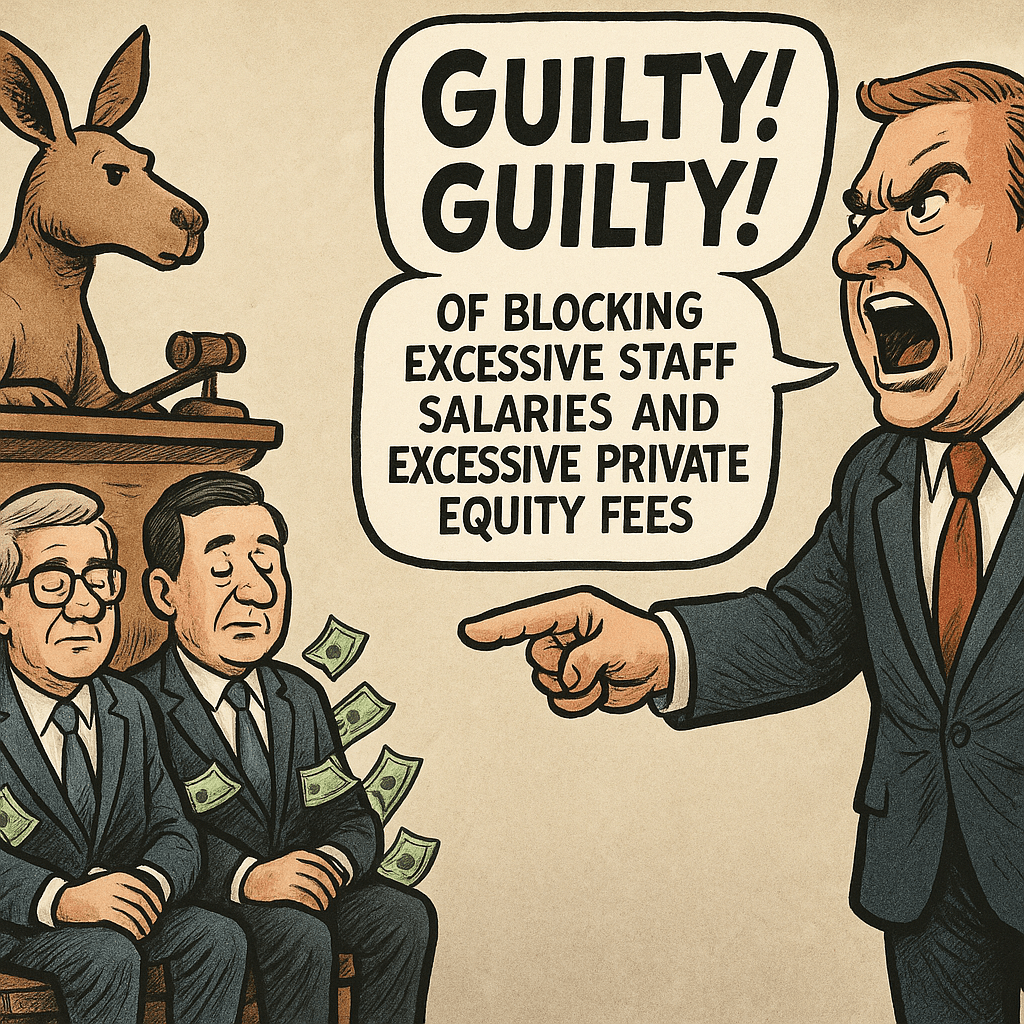
When reform-minded trustees such as Rudy Fichtenbaum, a respected economics professor, and Wade Steen, a CPA appointed by the governor, began to challenge the excess, Attorney General Dave Yost unleashed what many observers now describe as “lawfare” — the use of legal process as a weapon to silence oversight.
The AG’s office accused Fichtenbaum and Steen of “dereliction of fiduciary duty”, using a so-called QED report that originated from an anonymous staff letter — believed to include STRS insiders with direct conflicts of interest. STRS never invested one penny in QED, never paid one dollar in fees it was just a discussion and in fact QED was not even a real firm but a concept.
But the “scandal” achieved its political goal: it neutralized reform.
As one Columbus observer put it:
“They went after the watchdogs, not the thieves.”
The result? Trustees backed off from cutting excessive salaries. STRS staff hailed the AG’s intervention as a “political victory.”
3. From Oversight to Capture
After the QED lawfare episode, STRS moved quickly to consolidate control.
The board, under pressure, voted to hire a “Governance Consultant” — ACA Global Governance Advisors, the same firm criticized by Naked Capitalism for recommending excessive pay at CalPERS, another public fund mired in private equity conflicts.
Instead of independence, the firm provided justification for more bonuses and less transparency.
The Ohio Attorney General — who is supposed to represent STRS members — instead defended the staff and administrators, spending public resources to protect inflated pay.
4. The Salary Explosion: Data Speaks
Comparing 2019 vs. 2024 STRS data:
| Year | Over $600K | Over $400K | Over $300K | Over $200K |
| 2019 | 1 | 14 | 30 | 67 |
| 2024 | 4 | 20 | 49 | 85 |
That’s a 90% increase in six-figure employees in just five years — during a period when teachers’ COLAs were frozen.
Several investment directors saw total compensation increases of $150,000–$300,000 in that time frame, driven by bonuses unrelated to outperformance.
The STRS Checkbook data shows that investment staff like Matthew Worley (Deputy Executive Director, Investments) earned $731,797, while directors of various asset classes regularly earned $600,000–$700,000. Worley’s salary went up 59% over 5 years. Chief Legal Officer Stacey Wideman saw her salary jump 76% from $143k to $253k. Lynn Hoover jumped 92% from $207k to $400k. Aaron DiCenzo, Director of Alternative Investments, went up 111% from $281k to $593k. Ryan Collins, director of Fixed Income, went up 111% from $306k to $646k. Garret Wofford, a Portfolio Manager in Alternative Investments, went up 115% from $156k to $337k.
STRSsalaries2024.csv
.
Yet, none of these individuals have published investment research, appeared in CFA Institute journals, spoken at major conferences, or been recruited to higher-paying private-sector roles — the usual markers of genuine talent.
They are public bureaucrats, paid as if they were hedge fund stars.
5. Why So Much? Following the Money
The answer may lie in what STRS pays others — particularly Private Equity firms.
STRS invests billions in Blackstone, Apollo, KKR, Carlyle, and other politically connected firms, paying an estimated $800 million annually in hidden fees through secret no-bid contracts.
When a judge ordered disclosure of these contracts, STRS refused, providing only heavily redacted documents and claiming confidentiality.
Parallel litigation in Kentucky (involving the same Blackstone partnerships) revealed what Ohio hid: the contracts contain fee offsets, leverage limits, and LP Advisory Committee powers — all material to fiduciary oversight.
In short:
STRS staff are paid not for performance, but for looking the other way.
6. Dark Money and Media Silence
Since the Citizens United decision, Private Equity firms have become major dark-money donors to Republican campaigns.
Blackstone, KKR, fund GOP-aligned SuperPACs, while Bain Capital gave rise to Mitt Romney and GTCR to Illinois Governor Bruce Rauner, Carlyle to VA Governor Younkin, and General Catylst to MA gov Charlie Baker.
Wilbur Ross, Trump’s Commerce Secretary, was himself a PE baron.
Millions in dark money from Private Equity has flowed into Charter Schools https://theintercept.com/2021/07/02/charlie-baker-charter-schools-massachusetts-pension-fund/
In Ohio, Apollo Global Management — whose founder Leon Black paid Jeffrey Epstein $170 million for “tax advice” — wields extraordinary influence.
Apollo-affiliated entities now control Gannett, owner of the Columbus Dispatch, Cincinnati Enquirer, and dozens of smaller Ohio papers — the same media ecosystem that has largely ignored STRS corruption.
See: Ohio Media’s Complicity (Commonsense401kProject, 2025). Apollo was involved in the CALPERS scandal, where Ex. Director was sent to prison for 5 years and a trustee committed suicide.
7. Political Protection and Pay-to-Play
Attorney General Yost — a likely recipient of dark-money political support — continues to shield STRS leadership.
His office’s “lawfare” tactics against reform trustees effectively destroyed independent oversight.
Meanwhile, STRS’s own lobbyist, Alexander Strickmaker, has deep ties to FirstEnergy, the utility at the center of Ohio’s largest bribery scandal.
This is pay-to-play 2.0 — pension money, politics, and private equity all fused into a self-protecting system.
8. The Consequences for Teachers
While STRS insiders enrich themselves, retirees live with shrinking purchasing power.
Ohio’s Republican leadership fights to block even modest COLA restoration bills, claiming “fiscal prudence” — yet funds millions for bonuses, travel, and legal fees to suppress transparency.
Teachers’ lifetime savings have been turned into an ATM for insiders.
As one retired educator put it:
“They’re giving themselves Wall Street pay for Main Street performance — and we’re the ones footing the bill.”
 The CommonSense 401k Project
Pingback: EPSTEIN, APOLLO, AND OHIO TEACHERS’ BILLIONS | The CommonSense 401k Project