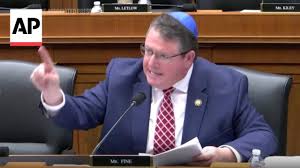
Why Rep. Randy Fine’s ERISA Bill Looks Like a Gift to Private Equity, Annuities, Crypto.
In April 2025, the U.S. Supreme Court handed down one of the most consequential ERISA decisions in decades: Cunningham v. Cornell University. This was an unanimous decision. Fine filed a bill to be more pro-Wall Street than the most pro-business justices of the current court
For the first time, the Court clarified that plaintiffs do not need to plead an exemption under ERISA §408 to survive a motion to dismiss. It is enough to plausibly allege a prohibited transaction under §406(a)(1)(C)—a fiduciary causing the plan to transact with a party in interest.
This seemingly technical point is a tectonic shift.
Cunningham dramatically lowers the barrier for bringing prohibited-transaction suits involving:
- Insurance annuities
- Recordkeeping and administrative arrangements
- Private equity and alternative assets
- Collective investment trusts (CITs)
- Crypto access and custodial arrangements
Any relationship with a service provider can now face discovery unless the fiduciary proves that an exemption applies—at the defendant’s burden.
Corporate counsel, insurance lobbyists, PE firms, and employer-side ERISA lawyers panicked. Plaintiffs’ firms rejoiced. And within months, Congress saw a new bill—one designed to effectively reverse Cunningham at the pleading stage.
That bill came from a surprising place: Rep. Randy Fine, a first-term Republican from Florida’s new 6th District, best known not for retirement policy but for fiery pro-Israel rhetoric “no genocide” “no starvation” “no problem” and a deeply intertwined relationship with the Republican Jewish Coalition’s donor base. He is also a staunch Trump loyalist and Trumps DOL EBSA appointee has reflected the strong industry opposition to Cunningham https://www.levernews.com/the-corporate-crusade-of-trumps-top-retirement-cop/
This is where the story gets interesting.
H.R. 6084: The ERISA Litigation Reform Act—A Cunningham Counterstrike
On November 18, 2025, Rep. Randy Fine introduced H.R. 6084, the ERISA Litigation Reform Act.
Its twin goals are simple:
- Raise the pleading standard for ERISA prohibited-transaction suits.
- Stay discovery until plaintiffs prove additional factual detail.
In other words: make it harder to sue annuity providers, private-equity platforms, recordkeepers, and crypto custodians—the exact entities most exposed after Cunningham.
The official statement from Fine’s office frames this as protecting employers from “abusive litigation tactics.” Committee Chairman Rep. Tim Walberg immediately endorsed the bill, calling it an essential reform for America’s retirement system.
But here’s the question:
Why is a freshman Florida congressman—whose political identity revolves around pro-Israel activism and cultural fights—leading the charge to shield private equity, annuity issuers, and crypto-adjacent financial players from ERISA suits?
The answer appears to be found in the donor network behind his campaign.
Follow the Money: RJC → Finance Billionaires → Fine
Federal Election Commission data shows that Rep. Randy Fine’s largest single political backer is the Republican Jewish Coalition PAC (RJC-PAC). Fine has also supported the President in blocking the Epstein files, which have ties to major Private Equity firms like Apollo. https://commonsense401kproject.com/2025/07/22/many-congress-get-donations-from-firms-linked-to-jeffrey-epstein-ky-congressman-andy-barr-example/
According to publicly available OpenSecrets-linked reporting:
- RJC-PAC sent over $60,000 to “Randy Fine for Congress”, making Fine one of its top beneficiaries in the 2024–2025 cycle.
- RJC-PAC’s funding base is heavily weighted toward high-net-worth donors from the hedge-fund, private-equity, and financial-services world.
- Major RJC donors include individuals associated with Elliott Management (Paul Singer), Cerberus Capital, Apollo-adjacent networks, real-estate investment conglomerates, and other alternative-asset firms.
- Historically, pro-Israel Republican super-donors like Sheldon Adelson poured tens of millions into RJC infrastructure, much of it tied to Wall Street wealth.
Put simply:
Fine is a direct financial product of a political network funded by the same financial titans who benefit most from blocking ERISA litigation against alternative assets and insurance contracts.
This doesn’t mean quid pro quo. It means alignment.
It means interests line up neatly.
Private equity wants fewer ERISA lawsuits. https://commonsense401kproject.com/2025/11/16/private-equity-in-401k-target-date-funds-is-a-prohibited-transaction-even-at-10-allocation-litigation-eminent/
Annuity companies want fewer ERISA lawsuits. https://commonsense401kproject.com/2025/11/01/annuities-are-a-prohibited-transaction-dol-exemptions-do-not-work/
Crypto and fintech custodians want fewer ERISA lawsuits. https://commonsense401kproject.com/2025/11/03/crypto-as-a-prohibited-transaction-in-401k-plans-target-date-and-brokerage-windows/
The RJC’s donor base includes players in those industries.
And now a top RJC-funded candidate is carrying a bill that would give them precisely what they want.
The Broader Pattern: Protecting Alts in 401(k)s While Weakening Prohibited-Transaction Enforcement
H.R. 6084 doesn’t exist in a vacuum. It fits into a larger mosaic:
1. The Retirement Investment Choice Act (H.R. 5748)
A bill that would codify the Trump-era Labor Department policy allowing private equity, private credit, and non-transparent alternatives inside 401(k) plans.
2. Industry push to allow crypto in DC plans
Fidelity and other players have lobbied heavily to protect crypto access in self-directed brokerage windows—and to shield themselves from fiduciary exposure.
3. The rise of CITs holding annuities and private-credit instruments
These state-regulated vehicles lack SEC oversight and are ripe for conflicts with recordkeepers and insurers. https://commonsense401kproject.com/2025/11/18/state-regulated-collective-investment-trusts-cits-as-vehicles-for-erisa-prohibited-transactions/
Cunningham threatens all of these.
H.R. 6084 gives them breathing room.
Why Fine? Why Now?
If you were drafting the perfect congressional messenger for this mission, you’d want someone who:
- Is brand-new to Congress (not yet publicly tied to legacy retirement-policy positions).
- Has a baked-in donor base from high-net-worth finance circles.
- Has strong ideological credentials that shield them from intra-party criticism.
- Is ambitious and eager to prove usefulness to leadership and donors.
- Is aligned with a donor ecosystem where Wall Street capital and pro-Israel politics overlap heavily.
That person is Randy Fine.
He may not fully grasp the ERISA implications of his own bill.
But his donors do.
His committee allies do.
And the financial-services industry absolutely does.
The Real Stakes: Cunningham v. Cornell Opens the Door—Fine Tries to Shut It
By shifting the pleading burden in prohibited-transaction cases back onto defendants, the Supreme Court restored the design of ERISA §406: to presume such transactions are improper unless proven otherwise.
If Congress now steps in to create a heightened pleading standard or a discovery stay, the result is predictable:
- Annuity issuers avoid discovery into spread-based compensation.
- Private-equity platforms avoid discovery into opaque fee structures.
- Recordkeepers avoid discovery into revenue-sharing and “soft-dollar” conflicts.
- Crypto custodians and fintech platforms avoid discovery into payments for distribution or platform placement.
And plan participants lose the oversight mechanism that ERISA was designed to provide.
Conclusion: Cunningham Opened a Door—Randy Fine is Trying to Close It for the Donors Who Stand to Lose
Whether or not Randy Fine personally understands the depth of ERISA fiduciary duties is almost beside the point.
What matters is this:
- Cunningham v. Cornell made it easier to sue financial institutions for conflicted 401(k)/403(b) arrangements.
- The industries most threatened—annuities, private equity, crypto, recordkeepers—have deep donor overlap with the Republican Jewish Coalition’s finance-heavy donor network.
- RJC-PAC is one of Fine’s largest political benefactors.
- Fine is now carrying a bill that would protect those donors’ industries by weakening ERISA enforcement.
This is not a coincidence.
It is the normal, predictable machinery of American political economy.
And it is a reminder:
Follow the money, and ERISA policy suddenly makes perfect sense.
Update 12/19/25— Fine Bill appears to be Dead on Arrival, Encore Fiduciary Conflict, and What This Means for Fiduciary Risk & Litigation
It is amazing that anyone in congress would be so anti fiduciary pro industry that they want to overturn a 9-0 Supreme Court decision to strip minimum protection from high fee high risk investments in 401k https://encorefiduciary.com/congressional-hearing-erisa-litigation-bipartisan-support-needed/
Thankfully such a blatant sellout to Private Equity, Annuities and Crypto was too much for a narrow majority to kill such legislation.
Since the original post on Rep. Randy Fine’s bill to effectively roll back the Cunningham v. Cornell University Supreme Court decision, additional context has emerged that underscores both the conflict-of-interest dynamics at play and the likely litigation response from plaintiff fiduciary lawyers.
1) Encore Fiduciary & Aronowitz: A Clear Conflict of Interest
The firm Encore Fiduciary — whose leadership until recently included Daniel Aronowitz, now Presidentially nominated to lead the Employee Benefits Security Administration (EBSA) — has publicly positioned itself as an advocate against ERISA litigation, calling for an end to what it terms “regulation by litigation.” Aronowitz’s testimony before the Senate emphasized reducing fiduciary litigation and easing plan sponsor exposure, including in areas such as private equity and crypto investment lineups for 401(k) plans. planadviser.com
This background raises an obvious conflict of interest: Encore’s business model includes focusing on fiduciary liability insurance and underwriting against litigation risk. As the head of EBSA, Aronowitz has influence over the very enforcement regime that determines how prohibited transaction claims and fiduciary breaches are litigated or regulated. Advocating publicly against litigation — especially in cases like Cunningham/Cornell — aligns with Encore’s commercial interests as much as any public-policy rationale.
Indeed, Encore has published commentary suggesting that plaintiffs’ fiduciary lawsuits such as Cornell are “frivolous” and constitute “litigation abuse” — arguing for heightened pleading standards to block access to discovery in prohibited transaction claims. Encore Fiduciary
That stance dovetails neatly with Fine’s bill (H.R. 6084, the ERISA Litigation Reform Act), which similarly seeks to raise barriers to prohibited transaction claims — effectively insulating annuities, private equity, recordkeeping arrangements, and crypto custodial arrangements from early litigation exposure. The CommonSense 401k Project The alignment between Encore’s advocacy and a sitting EBSA nominee — pushed by Fine’s caucus office — underscores that this is not a neutral policy debate but one deeply entangled with provider economic interests.
2) The Cunningham v. Cornell University Decision: Why Industry Feared It
The April 2025 Cunningham decision was unanimous (9–0) and significantly shifted the legal landscape by lowering the pleading standard for ERISA §406 prohibited transaction claims. Under Cunningham, plaintiffs no longer need to plead that a plan’s transaction lacked a statutory exemption before discovery proceeds; instead, claiming a prohibited transaction — including with a party-in-interest — is sufficient to get past initial motions. Supreme Court
This matters enormously for annuities and other insurance products. Annuities are per se transactions with parties in interest. Before Cunningham, industry defendants could often get prohibited transaction claims dismissed before discovery by arguing that a §408 exemption applied. Cunningham now means fiduciaries and insurers must plead and prove exemptions after discovery, increasing litigation risk, cost, and settlement leverage for plaintiffs.
That risk is precisely why firms like Encore have framed prohibited transaction suits as “absurd” or “frivolous,” and why Fine’s bill would reverse that dynamic by raising pleading thresholds and limiting early lawsuits. But critics argue such proposals would effectively immunize product vendors and fiduciaries from meaningful fiduciary accountability — contrary to ERISA’s protective purposes.
3) Why Fine’s Bill Is Likely Dead on Arrival (and What It Signals)
On its face, H.R. 6084 is so egregious — a legislative attempt to insulate Wall Street product vendors from fiduciary scrutiny — that it is unlikely to pass outside of a narrow party majority. Fine’s sponsorship of this bill is telling precisely because he is not a retirement policy expert; his political profile is dominated by cultural and geopolitical issues, not ERISA law. That suggests his sponsorship is not driven by substantive policy consensus, but by donor and industry networks that benefit from limiting ERISA litigation exposure. The CommonSense 401k Project
This dynamic mirrors why some industry actors openly oppose Cunningham — not because it undermines retirement plan administration, but because it makes it easier for plaintiffs to challenge products like annuities under ERISA’s prohibited transaction framework.
4) Implications for Annuity & Prohibited-Transaction Litigation
If Cunningham stands and the Fine bill falters, the litigation environment for prohibited transaction and fiduciary breach suits around annuities looks increasingly active:
- Plaintiffs can now more easily survive early dismissal — gaining discovery into annuity pricing, spread profits, conflicts, and exemption defenses. Supreme Court
- Increased discovery and lower pleading thresholds make it cost-effective for fiduciary lawyers to pursue cases involving annuities in 401(k) plans, especially where exemptions are routinely claimed without justification.
- The industry’s public push to weaken litigation standards inadvertently signals heightened litigation risk, as plan participants and fiduciary attorneys see Cunningham as a green light to pursue cases that previously stalled at the pleadings stage. Sidley Austin
In effect, the very sector that wants to discourage prohibited transaction lawsuits — including annuity issuers and fiduciary insurers — is under pressure from participants and courts to justify their exemptions and fiduciary processes on the merits rather than avoiding discovery.
5) Broader Policy Context: Alternatives and Risk Resistance
This legislative tussle also intersects with broader regulatory movements pushing alternative assets such as private equity and cryptocurrencies into DC plans. Recent executive orders and regulatory proposals have directed agencies to consider cryptocurrency and private equity as 401(k) investment options, framing them as “competitive” and “diversification enhancing” even though most participants express little interest once risks and fees are explained. LinkedIn
Senators from both parties have sounded alarms about exposing retirement plans to these risky assets, warning they lack transparency and traditional investor protections. Senate Banking Committee
The contrast could not be starker: while industry and some political actors push to broaden product menus to include high-risk assets, courts and participant advocates are pushing back via **fiduciary litigation — particularly prohibited transactions — to ensure products genuinely benefit participants rather than vendors.
Bottom Line
The controversy around Rep. Fine’s bill and the public positioning of Encore Fiduciary’s leadership reflect an industry backlash to the Supreme Court’s Cunningham decision — a backlash driven not by participants’ interests but provider risk mitigation. Rather than weakening ERISA enforcement, this episode is likely to spur more fiduciary litigation, especially around annuities and other non-transparent products that have long escaped rigorous prohibited transaction scrutiny.
**APPENDIX
Why a Pro-Business Supreme Court Ruled Unanimously in Cunningham —
And Why the Fine Bill May Be Doomed by ERISA’s Own Architecture**
Matthew Eickman, chief legal officer at the Fiduciary Law
Center in Omaha, Nebraska, anticipates that more fee lawsuits
alleging fiduciary breach will also focus on prohibited transaction
claims. https://drive.google.com/file/d/1YOyJ3-8SSw6AjCmyF5clejwdl0ve_VyS/view
Other major defense law firms like Groom https://www.groom.com/resources/cunningham-v-cornell-supreme-court-lowers-bar-for-erisa-406-claims/
and Gibson Dunn https://www.gibsondunn.com/wp-content/uploads/2025/04/supreme-court-clarifies-pleading-standards-for-erisa-prohibited-transaction-claims.pdf have voiced similar views.
There is an apparent contradiction that has puzzled many ERISA lawyers:
Why would a Supreme Court that is widely described as “pro-business” issue a unanimous opinion in Cunningham v. Cornell that makes it easier for plaintiffs to sue plan fiduciaries and service providers?
A deeper look at the Court’s ERISA jurisprudence reveals the answer
Thole v. U.S. Bank (2020) shut down DB plan standing so aggressively that the Court had to preserve standing and enforcement power in defined-contribution (DC) plans.
And once you understand that logic, the Randy Fine bill looks not only dangerous — but possibly unconstitutional or structurally impossible under ERISA.
1. Thole v. U.S. Bank: The Court Closed the Door in DB Plans
In Thole v. U.S. Bank (2020), the Supreme Court held 5–4 that defined-benefit (DB) participants lack Article III standing to sue for fiduciary breaches unless they can show an immediate financial loss.
Because DB benefits are fixed and guaranteed (unless the plan collapses), the Court reasoned that mismanagement doesn’t necessarily injure individual participants.
It was a massive win for employers, private-equity-heavy pension portfolios, and corporate de-risking strategies.
But it created a structural problem.
Thole wiped out ERISA fiduciary enforcement in DB plans.
https://jacobin.com/2020/07/john-roberts-supreme-court-wall-street
https://jacobin.com/2020/06/supreme-court-pensions-thole-mayberry-kavanaugh
The only remaining enforcement came from:
- DOL (which rarely acts),
- plan fiduciaries suing themselves (never happens), or
- criminal cases (extremely rare).
The Court knew what it had done.
2. Cunningham v. Cornell: The Court Had to Leave the DC Door Open
Fast-forward to 2025.
Cunningham v. Cornell arrives — focusing on §406(a)(1)(C) prohibited-transaction claims in 403(b)/DC plans.
The question:
Must plaintiffs plead and disprove an exemption (408) at the motion-to-dismiss stage?
The Second Circuit said yes.
The Supreme Court unanimously said no.
Why?
Because if the Court had closed off §406 claims in DC plans the same way it closed DB standing in Thole, ERISA enforcement would be nearly dead.
Cunningham is the “counterweight” to Thole.
Once Thole gutted DB enforcement, the Court had to preserve DC standing and DC prohibited-transaction claims to keep ERISA’s structure constitutional and functional.
Some key doctrinal reasons:
- ERISA §406 is designed to be strict-liability unless an exemption is proven.
The burden is on fiduciaries — not participants. - Congress intended broad enforcement in DC plans because participant accounts rise or fall based on fiduciary conduct.
- If both DB and DC plan enforcement vanished, ERISA’s protective purpose would be nullified, contradicting 29 U.S.C. §1001 and decades of precedent.
Thus, the Court ruled 9–0 to preserve basic DC enforcement.
This is the only position that keeps ERISA’s statutory scheme coherent.
3. Cunningham Wasn’t “Anti-Business” — It Was Doctrinal Maintenance
The Justices weren’t siding with plaintiffs.
They were preserving:
- statutory interpretation integrity,
- the §406/§408 burden structure,
- constitutional standing doctrine, and
- the basic idea that DC participants must have a remedy.
Even the Court’s staunchest “pro-business” members (Alito, Gorsuch, Roberts) signed on because ERISA’s architecture left no other legal option.
To rule the other way would have:
- broken ERISA’s strict-liability structure,
- inverted burdens of proof contrary to the text,
- expanded Thole into DC plans (unthinkable), and
- left ERISA practically unenforceable.
Which brings us to the new bill.
4. Why the Randy Fine Bill May Be Impossible to Implement Under ERISA
Some ERISA attorneys are already saying quietly what you’re saying loudly:
H.R. 6084 may be unworkable or even unconstitutional because it would violate ERISA’s core structural principles — the very principles the Supreme Court just reaffirmed in Cunningham.
Problems with the Fine bill:
(1) It tries to reverse the burden of proof Congress placed on fiduciaries.
ERISA §406 presumes transactions with parties in interest are prohibited.
The defendant must prove reasonableness under §408.
H.R. 6084 tries to force plaintiffs to disprove a §408 exemption before discovery — exactly what the Supreme Court rejected.
(2) It would undermine basic trust-law foundations.
ERISA’s fiduciary scheme is explicitly built on trust law, where fiduciaries carry the burden to justify conflicted transactions.
Congress cannot legislate away the trust-law core without rewriting ERISA from scratch.
(3) It could violate Article III by stripping remedies.
If both DB (Thole) and DC (under H.R. 6084) claims lack meaningful enforcement, courts could find the statute constitutionally deficient.
(4) It directly contradicts the unanimous statutory interpretation in Cunningham.
The Supreme Court’s reasoning is built on the text — not on policy:
- Exemptions are affirmative defenses.
- Plaintiffs do not need to plead them.
- Burden is on fiduciaries.
H.R. 6084 would flip all of that, setting itself up for immediate judicial invalidation.
(5) It conflicts with ERISA’s remedial purpose in §1001.
Congress explicitly declared the purpose of ERISA is to provide “ready access to the Federal courts” and “adequate remedies.”
A law closing off both DB and DC enforcement could violate Congress’s own statutory preamble unless rewritten wholesale.
5. The Bottom Line: The Supreme Court Already Told Congress What It Can’t Do
- Thole closed DB standing.
- Cunningham kept DC standing alive because otherwise ERISA enforcement collapses.
- The Fine bill aims to do indirectly what the Court explicitly said plaintiffs don’t need to do.
- For that reason, the bill is likely dead on arrival in the courts, even if it passed legislatively.
Put bluntly:
If Congress passed H.R. 6084, it would almost certainly be struck down as violating ERISA’s structure, statutory text, and basic trust-law principles reaffirmed unanimously in Cunningham.
Some employer-side attorneys already know this.
Some are quietly admitting it.
Others are hoping no one notices.
Appendix: The Two-Step ERISA Rollback Strategy Behind “Democratizing Alternatives”
How the Wagner White Paper and Encore’s “Higher Pleading Standard” Campaign Work Together to Protect Private Equity, Annuities, and Crypto
Your main post explains why Rep. Randy Fine’s bill (H.R. 6084) is best understood as a Cunningham counterstrike—a legislative attempt to re-raise the barrier to prohibited-transaction cases by requiring more detail up front and restricting discovery. The CommonSense 401k Project This Appendix adds an important framing: the policy ecosystem is not just legislative. It is also being built through “thought leadership” legal memos that normalize alternatives in DC plans and describe ERISA’s prohibited-transaction design as a litigation “problem” to be fixed.
Two recent examples show the full architecture:
- Wagner Law Group White Paper: normalize private equity/alternatives as prudent “portfolio modernization” and promise future “safe harbors” and reduced litigation uncertainty.
WagnerWhitePaperAlternativeInve… https://www.wagnerlawgroup.com/blog/2025/12/alternative-investments-in-401k-plans-executive-order-implications-and-key-fiduciary-considerations/
Encore Fiduciary blog post: portray Cunningham as making ERISA “unworkable,” and urge bipartisan support for a higher pleading standard to stop plaintiffs from reaching discovery. Encore Fiduciary https://encorefiduciary.com/congressional-hearing-erisa-litigation-bipartisan-support-needed/
Read together, they are a two-step strategy to strip ERISA’s effective bite without openly repealing ERISA.
Step One: Wagner’s “Permission Structure” for Private Equity and Alternatives in 401(k)s
The Wagner white paper is framed as neutral “fiduciary considerations,” but its practical effect is to legitimize and operationalize the expansion of private equity, private debt, crypto-related vehicles, real estate, infrastructure, and annuity/lifetime-income structures inside DC plans.
A. It leans heavily on Executive Order policy signals—without grappling with ERISA’s statutory prohibitions
Wagner’s opening premise is that a White House action “signals” a more favorable environment and directs agencies to create safe harbors and reduce legal uncertainty.
WagnerWhitePaperAlternativeInve…
But executive orders and agency tone shifts don’t change ERISA §406. They can repackage the narrative, but they can’t repeal the statute.
B. It treats DOL “neutrality” as a green light
Wagner highlights the DOL’s rescission of the 2021 supplemental statement as a return to a “neutral, principled-based approach.”
WagnerWhitePaperAlternativeInve…
That’s exactly the rhetorical move product manufacturers need: “We’re not endorsing—just being neutral.” In practice, “neutrality” becomes a distribution strategy for opaque, high-fee structures.
C. It moves the debate into §404 “prudence process” and away from §406 “prohibited transaction”
Wagner repeatedly emphasizes that the “duty of prudence is assessed based on processes, not outcomes,” using Intel/Natixis to steer fiduciaries toward documenting committee steps.
WagnerWhitePaperAlternativeInve…
But process formalism is the wrong center of gravity for many alternative structures, because the core issue is often structural conflicts and compensation—i.e., §406 prohibited transactions—where “good process” does not legalize an inherently conflicted arrangement.
D. It acknowledges liquidity and valuation problems—then downplays them into “manageable considerations”
Wagner concedes the obvious: liquidity mismatch and valuation are central risks (stale marks, true-ups, lagged valuations, “hard to value” assets).
WagnerWhitePaperAlternativeInve…
It even explains that plan-level funds may rely on valuation reports with lags (e.g., quarterly with a 30-day lag) and face “true-up” risk later.
WagnerWhitePaperAlternativeInve…
But it frames these as technical process issues (“hire valuation agents”) rather than the core enforcement problem: once you embed products that cannot be independently priced daily, you are effectively asking participants to accept manager-controlled mark-to-model NAVs—the same mechanism that makes benchmarking and accountability collapse.
Bottom line of Step One: Wagner supplies a legal-professional narrative that tells plan fiduciaries: you can do this, just document it, hire experts, and watch for safe harbors.
WagnerWhitePaperAlternativeInve…
Step Two: Encore’s Campaign to Make ERISA Prohibited-Transaction Claims Harder to Bring (and Much Harder to Discover)
Encore’s December 18, 2025 post is explicit: it argues that Congress must “fix” the Cunningham pleading framework by raising the pleading standard and limiting access to discovery. Encore Fiduciary
A. Encore defines the problem correctly—then frames the solution as “litigation reform,” not ERISA compliance
Encore complains that after Cunningham, “the mere allegation that a plan hired a service provider…is enough to survive a motion to dismiss” if the complaint also says fees were too high. Encore Fiduciary
But that is not a bug in ERISA. It is ERISA’s design:
- §406 treats conflicted transactions as presumptively improper
- §408 exemptions are affirmative defenses
- discovery is often the only way participants can prove hidden compensation and conflicts
Cunningham restores that structure (as your post notes). The CommonSense 401k Project
B. Encore ties its argument directly to Fine’s bill and the goal of overriding Cunningham
Encore explicitly says Fine’s bill would “override” Cornell/Cunningham and describes it as addressing a “must-fix” problem. Encore Fiduciary
That aligns precisely with the mechanism you describe in the Fine post: raise barriers, stay discovery, and blunt §406 suits targeting annuities, PE platforms, recordkeepers, and crypto custody. The CommonSense 401k Project
C. Encore’s “unworkable law” claim is really a defense of hidden economics
Encore argues the law becomes “unworkable” if hiring a service provider triggers discovery pressure. Encore Fiduciary
But the reason defendants fear discovery is not because ERISA is irrational. It’s because discovery is where you find:
- spread-based compensation in annuities / stable value
- revenue-sharing and platform payments
- affiliate deals, cross-subsidies, and “free” services funded elsewhere
- opaque valuation practices and fee layering
- conflicts buried in non-core options, managed accounts, custom TDF unitization, and CIT wrappers
In short: Encore is attacking the enforcement pathway precisely because the enforcement pathway reveals the economics.
Why the Two Pieces Fit Together: “Expand First, Disarm Enforcement Second”
Seen as a system, Wagner + Encore map onto a predictable playbook:
1) Normalize and distribute opaque products into DC plans
- “Neutral” DOL posture
- safe-harbor anticipation
- “process not outcomes” comfort language
- operational pathways: managed accounts, custom TDFs, non-core options, unitization
WagnerWhitePaperAlternativeInve…
2) Then weaken the only practical oversight mechanism (participant litigation + discovery)
- redefine §406 pleading as “abuse”
- raise pleading standard
- stay discovery
- override Cunningham’s burden-shifting reality Encore Fiduciary
That is how you “strip ERISA” without formally repealing it: keep the statute on paper, but remove the functional ability to enforce it.
The Key Contradiction You Should Highlight
Wagner admits alternatives bring:
- fee opacity
- liquidity mismatch
- valuation subjectivity and stale marks
WagnerWhitePaperAlternativeInve…
Encore simultaneously argues courts should make it harder for plaintiffs to get discovery unless they plead more specific facts up front. Encore Fiduciary
But plaintiffs often cannot plead “specific facts” about valuation manipulation, revenue sharing, spread profits, and affiliate payments until they get discovery, because those facts are controlled by the defendants and hidden behind:
- nontransparent wrappers (CITs, unitized custom TDF sleeves)
- side letters
- internal valuation memos
- proprietary fee schedules and revenue-sharing arrangements
So the combined message becomes:
“We want to move more complex, harder-to-value, harder-to-disclose products into 401(k)s…
and also make it harder for participants to use litigation to learn what those products really cost and how they really work.”
That is not “democratizing access.” It is democratizing exposure while privatizing information.
Appendix: The Two-Pronged Campaign to Mainstream Alternatives and Disable ERISA Enforcement
(Wagner “Alternatives in 401(k)s” white paper + Encore’s HR 6084 / pleading-standard push)
This appendix is designed to bolt onto your November 29, 2025 post on Rep. Randy Fine’s bill and Cunningham. It shows how two seemingly separate “thought leadership” streams are actually complementary parts of the same policy machine:
- Wagner Law Group provides the “how-to” legal memo for injecting private equity / private credit / crypto / real estate / annuities into participant-directed plans—by reframing everything as a §404 “prudence/process” discussion and leaning heavily on Trump’s Executive Order 14330 and prospective “safe harbors.”
WagnerWhitePaperAlternativeInve… https://www.wagnerlawgroup.com/blog/2025/12/alternative-investments-in-401k-plans-executive-order-implications-and-key-fiduciary-considerations/
WagnerWhitePaperAlternativeInve…
- Encore Fiduciary provides the “litigation shield” narrative—arguing that Cunningham made ERISA “unworkable” and demanding Congress raise pleading standards and stay discovery so prohibited-transaction cases die before plaintiffs can obtain the very evidence (fees, side payments, spreads, valuation inputs, affiliate deals) that proves conflicts.
- https://encorefiduciary.com/congressional-hearing-erisa-litigation-bipartisan-support-needed/
Put plainly: first normalize alternatives in 401(k)s, then neuter the enforcement mechanism that would expose how those alternatives actually pay.
A. Wagner’s Paper: “Process” as a Substitute for Legality
1) The core framing problem: “prudence theater” instead of §406 analysis
Wagner sets the stage by celebrating a “more favorable regulatory environment” for “Investment Solutions that incorporate alternative investments.”
WagnerWhitePaperAlternativeInve…
But notice what disappears in the paper’s architecture: ERISA §406’s per se prohibitions and the real-world implication of Cunningham (burden shifts; exemptions are affirmative defenses; discovery becomes the battleground). Instead, Wagner repeatedly presents alternatives as a matter of:
- prudent selection
- monitoring
- documentation
- “key considerations” (fees, valuation, liquidity)
…as if a “good process” can cure a structurally conflicted transaction.
That is the same conceptual error you’ve flagged repeatedly in your prohibited-transaction writing: §404 process cannot legalize a prohibited transaction under §406.
2) Executive Order 14330 as a rhetorical lever (not a legal change)
Wagner leans hard on Trump’s Executive Order 14330 and, critically, highlights the EO’s directive to develop “appropriately calibrated safe harbors” and to “curb ERISA litigation.”
WagnerWhitePaperAlternativeInve…
That’s not neutral fiduciary education—it is policy advocacy language that presumes litigation is the problem, not conflicted compensation.
And Wagner’s “watch for pending safe harbor guidance” framing nudges fiduciaries to behave as if future administrative safe harbors will sanitize what is, in many settings, a current statutory problem.
WagnerWhitePaperAlternativeInve…
3) The “wrapper strategy”: hide alternatives inside TDFs / managed accounts / custom QDIA structures
Wagner explicitly pitches alternatives via target-date suites, managed accounts, and custom TDFs, including the use of “Non-Core Options” that participants don’t directly select.
WagnerWhitePaperAlternativeInve…
This is the practical playbook for what you’ve been calling laundering:
- bury fee layers
- obscure benchmarks
- disconnect participants from line-of-sight holdings
- reduce accountability through “unitization” and valuation smoothing
Wagner treats this as operational sophistication. Your framework treats it as transparency regression by design—especially dangerous after Cunningham, because the entire point of §406 pleading is to open discovery into exactly these hidden arrangements.
B. Encore’s Argument: Rewrite Pleading Rules So §406 Can’t Function
Encore’s December 18, 2025 post is blunt: Cunningham created a “must-fix problem for Congress,” because the “mere allegation” that a plan hired a service provider (a prohibited transaction) can survive a motion to dismiss. Encore Fiduciary https://encorefiduciary.com/congressional-hearing-erisa-litigation-bipartisan-support-needed/
That’s not an “ERISA crisis.” That is ERISA functioning as written: §406 presumes certain transactions are suspect; §408 exemptions are defenses to be proven by defendants.
1) Encore’s thesis (in their words): discovery is the enemy
Encore complains that Cunningham gives plaintiffs “a free pass to discovery every time that a plan hires a service provider,” creating pressure to settle. Encore Fiduciary
But for alternatives/annuities/crypto/CITs, discovery is not a nuisance—it is the only tool participants have to uncover:
- indirect compensation
- spread profits
- revenue sharing / platform payments
- affiliate self-dealing
- valuation inputs and “true-up” practices
- gate/redemption discretion and side letters
In other words, Encore is openly describing a world where plans can transact in opaque, conflicted markets without the risk of having to produce documents early.
2) The HR 6084 mechanism: shift the burden back to plaintiffs
Encore praises HR 6084 (Fine’s ELRA) because it would require plaintiffs to plead and prove that a transaction does not qualify for the §408(b)(2) “reasonable compensation” exemption—at the motion-to-dismiss stage.
Encore also notes the bill would “generally stay discovery until after a motion to dismiss is ruled on.”
That combination is the whole trick:
- Plaintiffs must allege non-exemption facts
- But plaintiffs can’t access the facts because discovery is stayed
- Result: de facto immunity for opaque compensation models
This is especially potent for private equity, private credit, annuities, and crypto custody, because the most important economic evidence is not public and often not meaningfully disclosed to participants.
3) “Frivolous” is a marketing label, not a legal analysis
Encore repeatedly characterizes these cases as “baseless” or “frivolous,” including Cornell itself. Encore Fiduciary+1
But the Supreme Court was explicit that the statute’s structure compels the burden allocation—and Encore admits that, too, while blaming Congress for writing ERISA that way. Encore Fiduciary
So what Encore is really saying is:
ERISA’s design is inconvenient for the plan sponsor / service provider market, therefore Congress should redesign it.
That is precisely why this belongs in your Randy Fine narrative.
C. How the Two Pieces Fit Together: “Open the Door to Alternatives, Close the Courthouse Door”
Here’s the combined logic chain you can state plainly in your post:
- Wagner tells fiduciaries: the White House wants alternatives in 401(k)s; DOL is moving back to “neutrality”; safe harbors are coming; proceed with a prudent process.
WagnerWhitePaperAlternativeInve…
WagnerWhitePaperAlternativeInve…
- Encore tells Congress: Cunningham makes it too easy to sue; discovery is the problem; raise pleading standards; stay discovery; force plaintiffs to plead away exemptions. Encore Fiduciary+1
- Randy Fine’s HR 6084 operationalizes Encore’s wish list while the Trump EO provides the policy “wind at the back” for the Wagner “how-to memo” ecosystem. The CommonSense 401k Project+1
Net effect: alternatives get distributed more widely, while ERISA enforcement becomes harder precisely where opacity is greatest.
That is not “democratizing access.” It is democratizing fee extraction.
D. Closing
Wagner’s white paper is the polite, professionalized version of the sales pitch: “Don’t worry—just document the process, and the regulatory winds are shifting.”
WagnerWhitePaperAlternativeInve…
Encore’s blog is the hard-edged political version: “Don’t allow discovery—raise pleading standards—make plaintiffs plead away exemptions up front.” Encore Fiduciary+1 Together they reveal the real strategy behind the Fine bill: expand distribution channels for private equity, annuities, and crypto wrappers inside 401(k)s and then strip participants of the only practical enforcement tool that can expose hidden compensation and conflicts after Cunningham.
—————————————————————————————————-
Executive Summary of the Critique
The Wagner paper functions less as neutral fiduciary analysis and more as a legal normalization memo for private equity and alternatives in DC plans. Its core flaws are:
- Treating ERISA §404 prudence as the controlling standard while largely ignoring ERISA §406 prohibited transactions
- Framing private equity risk as a disclosure and process problem rather than a structural illegality
- Relying on executive orders and agency tone shifts as if they could override statute
- Using litigation outcomes selectively while ignoring Cunningham v. Cornell’s burden-shifting implications
- Normalizing conflicted compensation, valuation opacity, and liquidity mismatches as manageable “considerations”
- Failing to analyze private equity managers, insurers, trustees, and consultants as parties in interest
 The CommonSense 401k Project
Pingback: Wall Street Journal Exposes Target Date CIT Corruption — But They’ve Only Scratched the Surface | The CommonSense 401k Project
Pingback: ERISA Prohibited Transactions Easy to Find and Prove with 5500 | The CommonSense 401k Project