By Christopher B. Tobe
My wife and I are parents of an autistic daughter. Medicaid waiver services are an essential part of how we meet her needs and plan for her future.
When Washington debates Medicaid, we hear something more concrete than competing budget numbers. We hear questions about whether families can find caregivers, whether community services will remain available, and whether adults who need substantial support will have somewhere safe to live when their parents can no longer care for them.
Kentucky’s Senate candidates, Andy Barr and Charles Booker, should be judged on how their policies answer those questions.
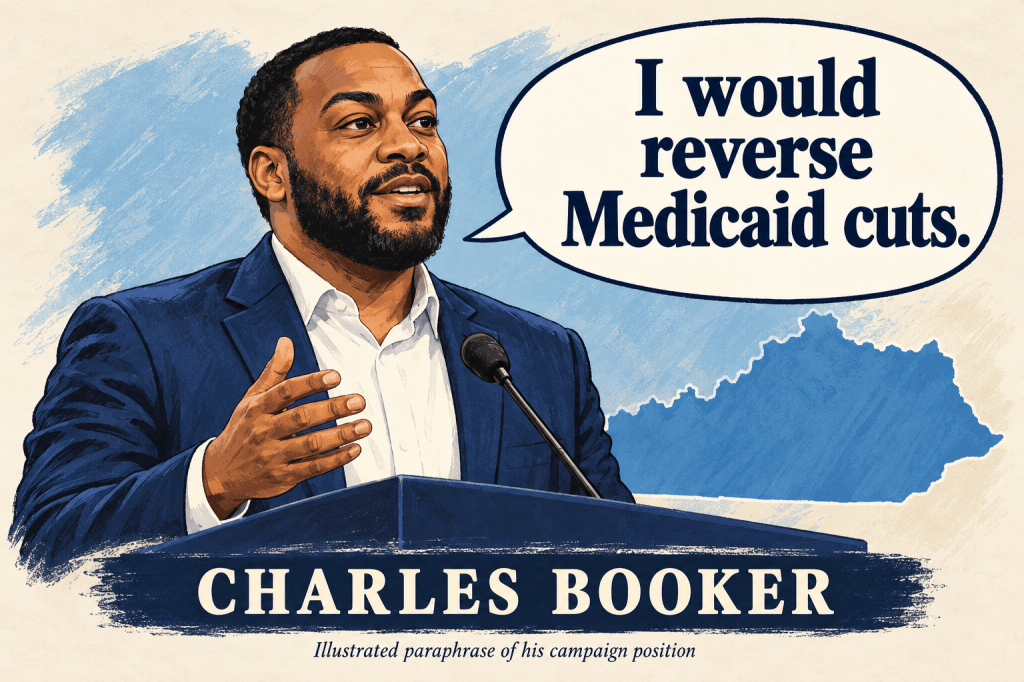
The record shows a clear difference. On July 3, 2025, Barr voted for final House passage of the One Big Beautiful Bill Act, which President Trump signed the following day. Booker’s campaign explicitly calls for reversing the law’s Medicaid cuts. One candidate helped enact the changes; the other promises to reverse them.
Voters deserve to understand what that difference means.
KFF reports that the Congressional Budget Office estimated the legislation would reduce federal Medicaid spending by approximately $911 billion over 2025–2034 compared with the previous legal baseline. This is a substantial withdrawal of federal support relative to what otherwise would have been provided.
Barr has defended the legislation as protecting Medicaid against fraud, waste, and abuse. He has also argued that Medicaid spending will continue growing over the next decade.
Spending can rise in dollars while falling substantially below the amount projected under prior law. Population needs, medical costs, and caregiver wages do not stop increasing because Congress changes a funding formula. A growing national spending total does not establish that Kentucky will have sufficient resources to sustain access to care.
The relevant question is whether people can actually obtain the services they need.
That matters especially for home and community-based services. Most of these services are optional under federal Medicaid law, and states can limit waiver enrollment and spending. KFF warns that federal funding reductions could lead states to serve fewer people, reduce benefits, or lower provider payments.
“Optional” is a budget classification. For a family depending on personal care, respite, behavioral support, or residential assistance, these services can be indispensable.
Nor does an exemption from work requirements settle the issue. Kentucky says the requirements beginning January 1, 2027, apply principally to Medicaid expansion adults, with exemptions including people with disabilities and qualifying caregivers. Those protections matter. They do not guarantee adequate funding for waiver services or an available caregiver.
Kentucky has already demonstrated how fragile this system can be. In July, Governor Andy Beshear announced that unexpected revenue would prevent a planned 4% Medicaid provider fee schedule reduction and address underfunding of existing Michelle P. waiver slots. That was a separate state budget dispute, and it should be described accurately. It also showed that maintaining services requires actual money and deliberate policy choices.
Booker’s commitment to reverse the federal Medicaid cuts addresses that funding problem more directly than assurances that the program remains protected.
Kentucky’s next senator must also recognize the connection between family caregiving and the broader economy. When reliable support disappears, someone must fill the gap. Often that means a parent reducing work, leaving employment, or postponing retirement. The need remains even when public funding retreats.
For my family, planning for our daughter’s future requires services we can depend on over many years. Kentucky deserves a senator prepared to make that same long-term commitment—and willing to be held accountable for delivering it. Charles Booker is that Senator.

